Monogram Column Refrigerator Running Warm in Summer Heat
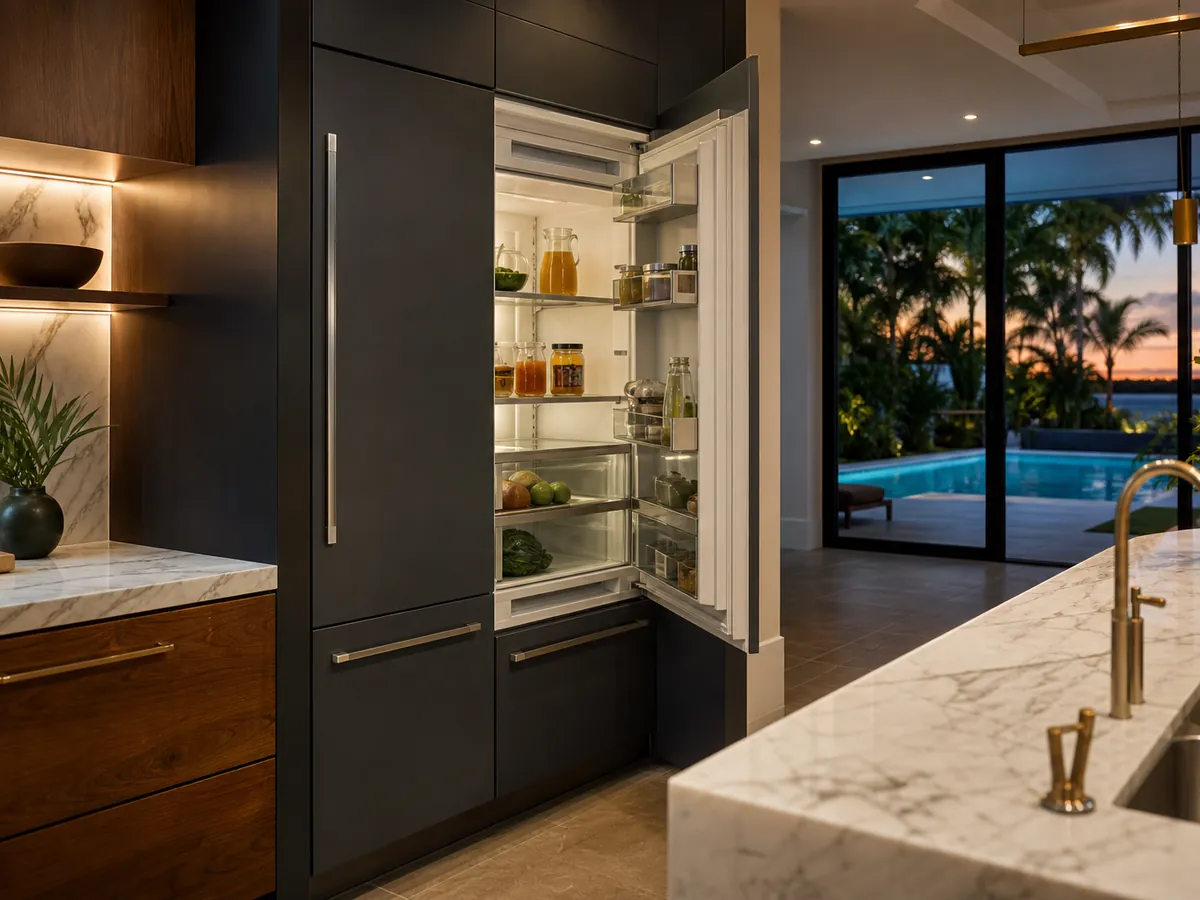
A Monogram column refrigerator that runs warm in a Tampa Bay summer is usually reacting to something around it: a dusty grille, a door that does not seal, blocked interior vents or a changed set point. Check those four first, with a thermometer, before you assume the cooling system itself has failed.
Why does a column refrigerator warm up when the weather gets hot?
A built-in column refrigerator has to push heat out of the cabinet and into your kitchen. In July and August the kitchen is warmer, the air is humid, and the unit works longer to hold the same temperature. A small restriction that went unnoticed in March can become a real warming problem once the outdoor heat arrives.
What should you check first at home?
Start with a thermometer. Place a refrigerator thermometer in a glass of water on the middle shelf, leave it for several hours, then read it. The USDA recommends keeping the refrigerator at or below 40°F. The display on the door shows the set point, but it does not always match what the food is actually experiencing.
Then walk through the simple checks in this order:
- Confirm the door closes fully. A tall door can be held open by a bottle, a bin or a shelf that sticks out.
- Look at the set point and make sure nobody changed it, or switched on a mode meant for a party or a big grocery load.
- Check the inside vents and remove anything that blocks them, such as a tall container pushed against the back wall.
- Look at how full the cabinet is. A crowded refrigerator moves cold air poorly.
Do not use a hair dryer, a heater or ice to speed things up. Give the unit several hours after any change before you decide whether it helped.
Could the grille and condenser coils be the cause?
Yes. Heat leaves the refrigerator through condenser coils, usually reached behind the lower grille. When dust, pet hair or kitchen grease coats the coils, the heat stays in, the compressor runs longer and the cabinet warms up. This is one of the most useful things to look at before summer.
Switch the unit off at the breaker, or unplug it if the plug is reachable, before you touch anything near the grille. Follow your use-and-care guide for how the grille comes off. A soft brush and a vacuum on the grille opening is a reasonable owner task. Do not bend the fins, do not remove panels deeper in the cabinet, and do not touch the sealed system. If the area behind the grille is packed with debris or the coils are hard to reach, tell us before you try to clean them.
| What you notice | Likely cause | What you can check | When to call |
|---|---|---|---|
| Warm all over, compressor seems to run constantly | Dirty coils or a hot, tight cabinet space | Vacuum the grille opening with the power off | Still warm after cleaning and a full day of settling |
| Warm near the door, cool in the back | Worn or dirty door seal | Close the door on a strip of paper and see if it slides out freely | The seal is torn, stiff or will not close flat |
| Cool in one spot, warm in another | Blocked air vent inside | Move food away from vents | Airflow stays weak with the vents clear |
| Display shows a higher number than you set | Changed setting or a recent door opening | Reset the set point and wait several hours | The number keeps climbing |
| Frost on the back wall or a fan that is silent | Airflow problem in the cooling system | Observe only, do not chip at ice | Right away |
How do you tell if the door seal is the problem?
The door seal, or gasket, is the soft rubber strip around the door. Heat and humidity make a dirty seal sticky, and a seal that sticks can tear or pull away from the door. Wipe it with warm water and a little mild dish soap, dry it, and look for gaps, folds or cracks. Water drops forming along one edge of the door are a sign that moist air is getting in.
The paper test is simple. Close the door on a strip of paper at several spots around the frame. If the paper pulls out with no resistance, the seal may not be touching at that spot. A leveling problem can cause this too, because a column that leans slightly will not close evenly. Do not adjust the unit yourself if it is installed between cabinets, since moving a built-in column can strain the panel and water line.
When should you stop checking and call a technician?
Call when the cabinet stays above 40°F after you have cleaned the grille, cleared the vents and confirmed the door closes. Call sooner if you hear a clicking compressor that never settles, see ice on the back wall, or notice water pooling inside or under the unit. Those signs point to defrost, fan or sealed system problems that need tools and training.
When we look at a column refrigerator running warm, we check airflow at the vents, the condition of the coils, the fans, the defrost system and the door seal, and we confirm the temperature with our own thermometer before we recommend a repair. In the meantime, keep the doors closed as much as you can and move the most perishable items to a cooler with ice if the thermometer stays high.
For food, rely on temperature and time rather than appearance. The USDA guidance says to discard perishable food that has been above 40°F for more than two hours. Smell and look do not tell you whether bacteria have grown. When in doubt, throw it out.
Frequently asked questions
Is it safe to keep food in a refrigerator that feels warm?
Not until you measure. Put a thermometer inside and read it after a few hours. If food has been above 40°F for more than two hours, USDA guidance says to discard perishable items such as meat, dairy and cooked leftovers. Appearance and smell are not reliable.
Can a storm or power surge affect the temperature?
It can. After an outage the cabinet needs time to recover, and a surge can disrupt the controls. Keep the doors closed during an outage, then check the thermometer once power returns. If the display looks wrong or the unit will not recover, have it checked.
Should I turn the setting colder to compensate?
Only a little, and only to test. A much colder setting can freeze produce and still not fix a blocked coil or a leaking seal. Return the control to its normal setting once you have cleaned the grille and cleared the vents, then recheck with a thermometer.