Monogram Range Hood Fan Weak or Lights Not Working
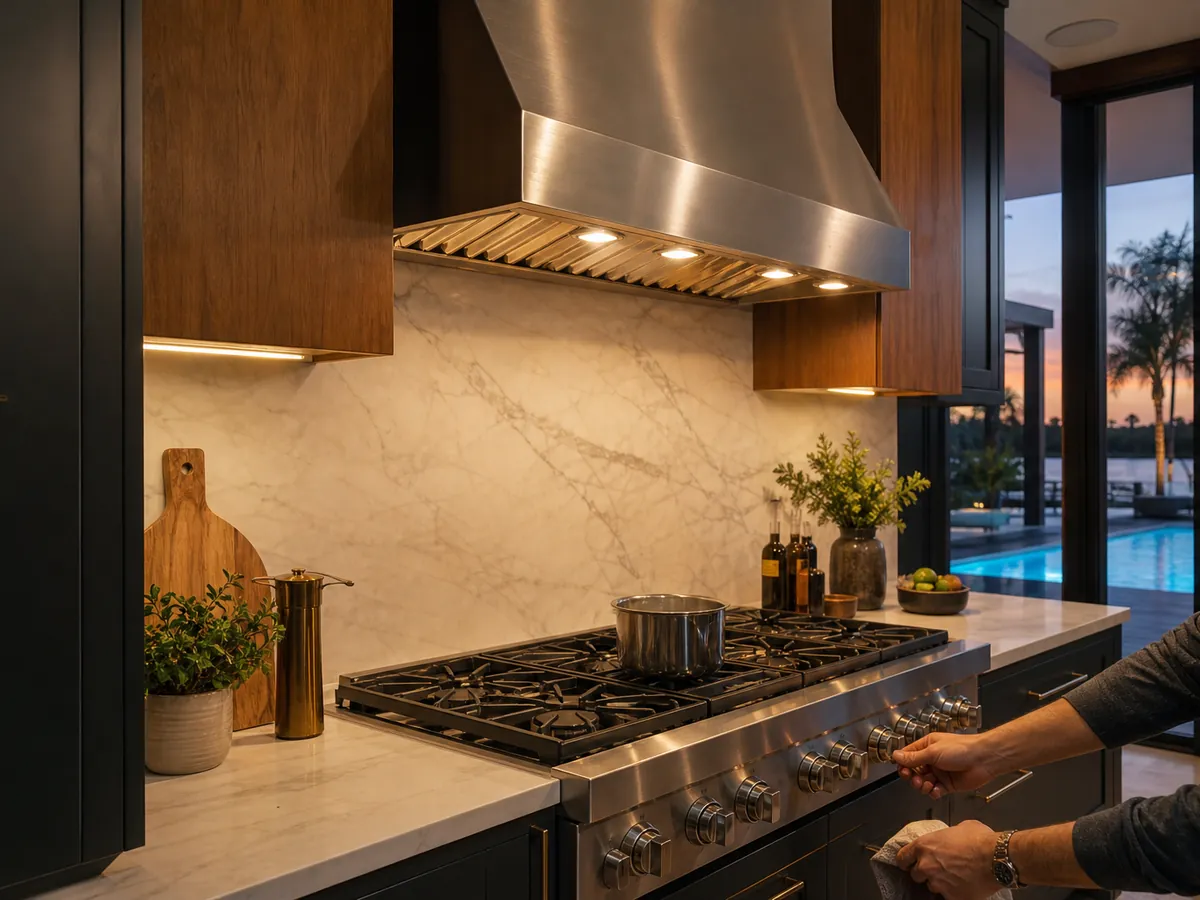
A Monogram range hood that pulls weakly or has dead lights is often dealing with greasy filters, a restricted duct, a control setting or burned-out bulbs. You can check the filters, the settings and the bulbs yourself with the power off. Duct work and wiring need a technician.
Why is the fan weaker than it used to be?
Grease is the usual reason. Cooking in a Florida kitchen produces steam and grease, and both collect in the filters. A filter coated with grease restricts airflow, so the fan runs while very little air moves. The change is slow, which is why owners notice it only when they compare the hood with how it worked when it was new.
A second reason is the duct. A hood that vents outside depends on a clear path through the wall or roof. Nests, lint, a stuck damper or a closed outdoor cap can choke the airflow. In coastal homes, salt air and humidity can corrode an outdoor cap or damper. If the fan sounds strong and the air barely moves, the duct deserves a look.
How do you check and clean the filters?
Switch the hood off and wait for the lights and the fan to stop, and let the lights cool if they were on. Remove the filters following the use-and-care guide. Most can be washed in warm water with a degreasing dish soap, rinsed and dried fully before they go back. Some models call for a dishwasher cycle, while others do not allow it, so check the guide for your hood.
Let the filters dry completely, then put them in. A wet filter can drip grease or rust. If the filters are bent or damaged, replace them with the ones listed for your hood. Do not run the hood without filters, because grease will reach the fan and the lights.
What about the lights and the controls?
Lights go out for ordinary reasons. The bulb may be spent, it may be loose, or it may be the wrong type. Turn the power off at the breaker, let the bulb cool, and replace it with the type your use-and-care guide names. A hood that is hot from cooking can burn your fingers, so wait.
If new bulbs do not help, look at the control. Make sure the light setting is on and that the fan and the light are not on separate controls you forgot to turn. If the hood has a speed setting or a delay shutoff, check that it was not changed. A control that does nothing at all, or only some speeds that work, points to the switch, the control board or the fan motor.
| Sign | Likely cause | Owner check | Next step |
|---|---|---|---|
| Weak pull, loud fan | Greasy filters or blocked duct | Clean filters, look at the outdoor cap | Call if no change |
| Fan hums but does not turn | Motor or blower problem | Switch off and do not force it | Call |
| One light out | Spent bulb | Replace with the listed bulb | Owner |
| All lights out | Control, wiring or power | Check the breaker and settings | Call |
| Odor when the fan runs | Grease in filters or damper | Wash the filters | Call if it persists |
| Hood works only on some speeds | Switch or control problem | Try each speed | Call |
Does the hood need a clear makeup air path?
In a tight, air-conditioned home, a powerful hood may have trouble pulling air out if the house has no way to replace it. If the pull is weaker when the home’s doors and windows are closed, it may be a makeup air issue and not a hood problem. Whether your home needs a makeup air system depends on local code and the installation, so ask the installer or a licensed contractor.
An outdoor hood on a lanai has different needs. It sits in humid, salty air, so filters and surfaces need more regular cleaning, and wind can reduce how well a hood captures smoke. A covered outdoor kitchen still needs a clear path for fumes.
When should you call a technician?
Call when the filters are clean, the settings are right, the bulbs are new and the hood still performs poorly. Call too for a grinding or rattling sound, a burning smell, a fan that stops on its own, or a hood that trips a breaker. These signs can involve the motor, the blower wheel, the control board or the wiring.
We test the motor, the blower, the controls and the lights, and we look at the damper and the duct connection as far as it is accessible. We explain what we find and give you the price in writing before work begins. Duct repairs inside walls or the roof may need a separate contractor, and we will tell you if that is the case.
Frequently asked questions
How often should I clean the hood filters?
That depends on how much you cook. Heavy frying and searing call for more frequent cleaning than occasional use. A good rule is to clean when you see grease on the surface, and follow the guidance in your use-and-care guide.
Can I use any bulb in the hood?
Use the type named in your guide. The wrong bulb can run too hot or not fit, and it may shorten the life of the socket. If you cannot find the right one, ask us.
Is a ductless setup different?
A hood that recirculates air uses charcoal or similar filters that must be replaced, not washed. If your hood recirculates, the filter type and schedule are in your guide.
Why does the hood smell after cooking?
Grease on the filters or in the damper can smell when the fan warms. Clean the filters and wipe the visible surfaces. If the smell is a burning one, switch the hood off and have it checked.