Monogram Wall Oven Slow to Preheat or Baking Unevenly
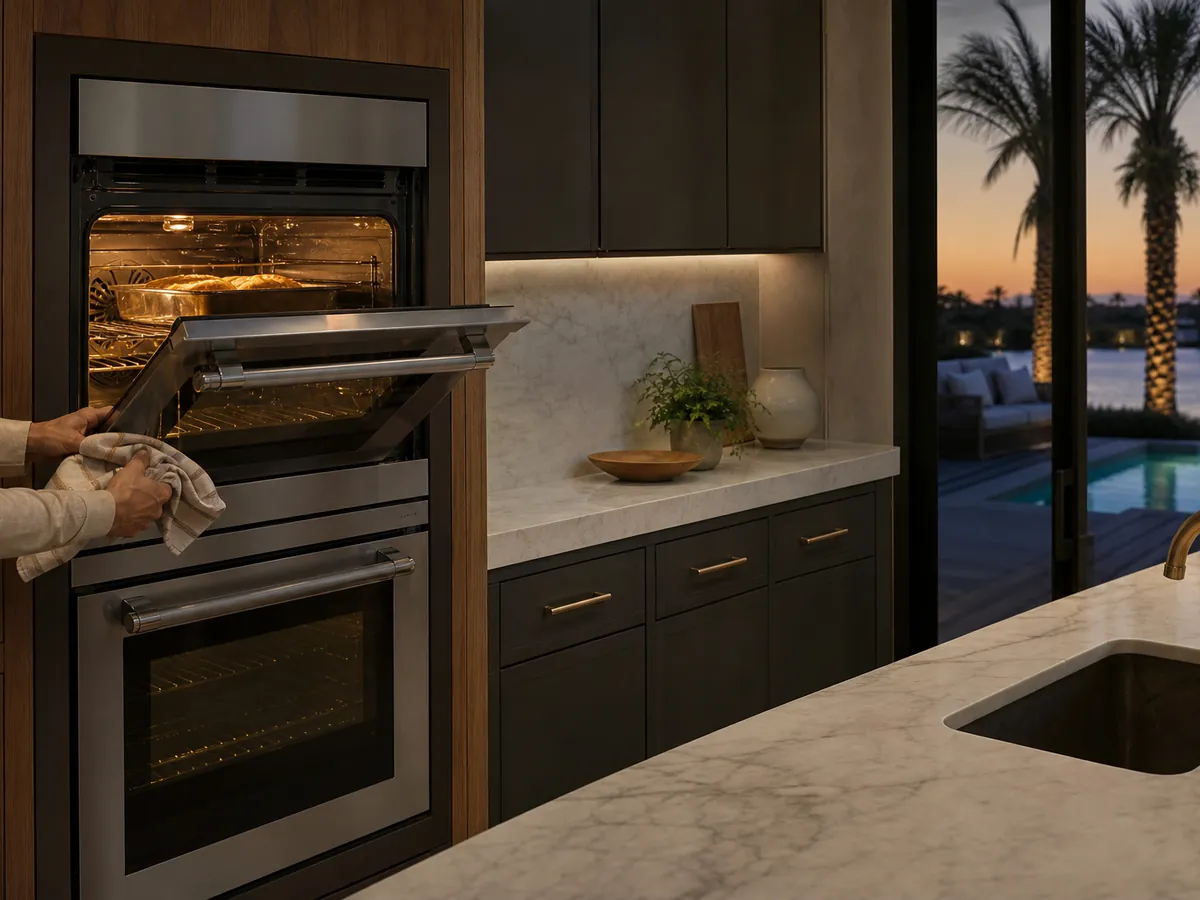
A Monogram wall oven that takes too long to preheat or bakes unevenly is often telling you about rack position, pan choice or convection settings before it tells you about a failed part. Check those first. If the oven still lags after that, the bake element, the temperature sensor or the convection fan may need attention.
How long should a wall oven take to preheat?
Preheat time depends on the model, the target temperature and what is inside the oven. A double wall oven takes longer when both cavities are in use, and a heavy pizza stone or a full rack of pans soaks up heat before the air warms. Your use-and-care guide describes what to expect, and the display normally signals when the oven has reached temperature.
What matters is a change. If the oven used to be ready in a certain time and now takes much longer, or the preheat signal sounds but the food cooks slowly, that change is the sign worth following.
Why do my baked goods brown unevenly?
Uneven browning has several ordinary causes. Pans that touch the oven walls block airflow. Dark pans brown faster than light ones. A rack set too high places food close to the top heat, and one set too low puts it near the bottom heat. A tray that fills the whole rack stops air from moving around the food.
Convection ovens add a fan that circulates the heat. A convection setting can cook faster and more evenly, but recipes written for standard baking may need a shorter time or a lower setting. Check your use-and-care guide for the recommended adjustments, and avoid covering the whole rack with foil, since that blocks airflow.
What can you check yourself?
Turn the oven off and let it cool completely. Then look at the simple items:
- Remove extra racks, pizza stones or pans that were left inside and may block air or soak up heat.
- Make sure the racks sit level and in the positions your guide shows.
- Check that the door closes and the gasket is not torn or pushed out of place.
- Confirm the oven is set to bake, not to a mode such as broil or a timed cook that was left on.
- Place an oven thermometer in the center and compare it with the display once the preheat signal sounds.
An oven thermometer is the most useful thing you can do. If it shows a large gap from the display after the oven has been on for a while, tell us the difference you saw. Do not open the back panel, touch the heating elements or work on the wiring. Never use a cooking oven to heat the home.
| What you notice | Possible cause | What you can check | Who handles it |
|---|---|---|---|
| Long preheat | Heavy items inside, or a weak bake element | Empty the oven and time the preheat | Technician if still slow |
| Burned bottoms | Rack too low or dark pan | Move the rack up, use a lighter pan | Owner |
| Pale tops, dark edges | Uneven heat or a crowded rack | Space out pans, rotate halfway | Technician if it continues |
| Temperature off by a lot | Sensor drifting | Compare with an oven thermometer | Technician |
| Convection fan quiet | Fan or motor problem | Listen with the convection mode on | Technician |
Do the bake element and sensor wear out?
They can. The bake element is the heating part at the bottom of a conventional oven, and some models use a hidden element. If an element has a bright spot, a blister, a crack or a patch that does not glow when the oven is on, it may be failing. Do not touch it while the oven is hot or powered.
The temperature sensor is a thin probe inside the oven that tells the control how hot the cavity is. When it drifts, the oven may heat too long or stop too early, and the display and the actual temperature no longer agree. A sensor problem looks like uneven cooking, and only a measurement tells it apart from an element problem.
When should you call a technician?
Call when you have emptied the oven, set the racks correctly, tried an oven thermometer and the results still do not match the display. Call too for a convection fan that does not turn, a visibly damaged element, a smell of burning, or an oven that trips a breaker. A storm surge can also damage an electronic control, so mention if the problem began after one.
We test the element, the sensor, the convection fan, the door seal and the control, and we compare the oven to a separate thermometer. We explain the result before any part is ordered and give you the price in writing before we start. If the oven is under warranty, check your warranty terms; independent service does not by itself void a warranty.
Frequently asked questions
Should I recalibrate the oven myself?
Some ovens have an adjustment described in the use-and-care guide. Use it only after you have measured with a reliable oven thermometer, and make small changes. If the oven is far off, an adjustment will not cure a failing part.
Is it normal for the oven to cycle on and off?
Yes. The heat turns on and off to hold the set temperature, and the temperature moves a little around the target. A large swing or a long gap with no heat is what to report.
Does convection always cook faster?
Often, yes, but recipes vary. A fan speeds browning, so some foods need a shorter time or lower setting. Use the guidance in your manual and check food with a thermometer rather than the clock alone.
Is it safe to use the oven while waiting for service?
If there is no burning smell, no sparking and no breaker trip, many owners keep using it with an oven thermometer. Stop and call if you see smoke, a damaged element or any unusual heat from the cabinet.