Monogram Dishwasher Leaves Water in the Tub After a Cycle
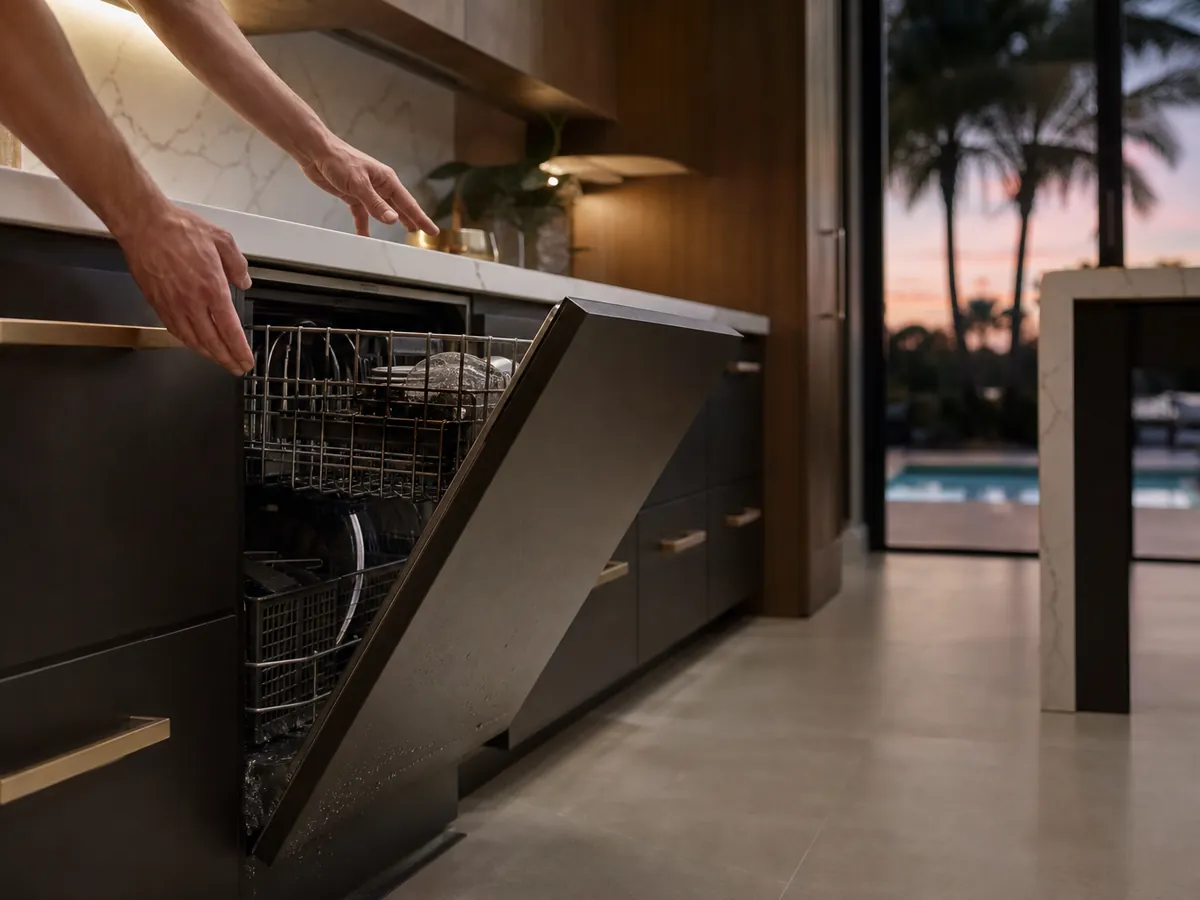
Standing water in the bottom of a Monogram dishwasher after the cycle ends usually means the drain path is restricted. The cause is often a clogged filter, a kinked drain hose, a blocked air gap or a disposer knockout plug that was never removed. Check those in order, with the power off, before you call for service.
Is some water in the tub normal?
A small amount of water around the base of the tub, near the filter, can be normal. Many dishwashers keep a little water in the sump so the seals do not dry out. What is not normal is a visible pool that reaches the bottom rack, a sour smell, or dirty water that is still there hours after the cycle finished.
If the water is only there after a wash and disappears by itself, it may just be the sump. If it stays and grows with each load, the drain is not keeping up.
What can you check, starting with the filter?
Turn the dishwasher off and switch off its breaker before you reach in. Then scoop out the standing water with a cup and a sponge so you can see what you are working on.
- Pull out the lower rack and look at the filter at the bottom of the tub. Remove it following the use-and-care guide and rinse it under warm water. Food, labels and bits of glass collect here.
- Look into the sump under the filter for anything stuck, such as a seed, a toothpick or a piece of a broken glass. Wear gloves and be careful of sharp edges.
- Check the drain hose where it is visible under the sink. A hose that is crushed or folded behind the cabinet stops the flow.
- Run a short cycle and watch whether the water leaves.
Keep your hands away from the pump and the heating area. Do not tilt or pull a built-in dishwasher out of the cabinet to reach the hose, because the unit is connected to water, drain and power.
What are the air gap and the disposer knockout?
Two parts of the plumbing cause trouble in many kitchens. The air gap is a small fitting on the countertop or sink next to the faucet, in places where local plumbing practice calls for one. Its job is to stop dirty water from flowing backward. When it clogs, the dishwasher cannot drain. Lift the cap and look inside; if you see debris, clean it out after the power is off.
The knockout is a thin plug inside the garbage disposer’s dishwasher inlet. A new disposer ships with the plug in place. If the plug was not knocked out when the disposer was installed, the dishwasher has nowhere to send water. If the problem started right after a new disposer or a plumber visit, this is a likely cause, and a plumber or technician can remove it. The disposer itself can also be clogged. Run it with cold water, with the dishwasher off, to clear it.
| Where | What can go wrong | Owner check | Who fixes it |
|---|---|---|---|
| Filter and sump | Food and small objects blocking the intake | Remove and rinse the filter | Owner, then technician if debris is deeper |
| Drain hose | Kink or crush under the sink | Look at the visible portion | Technician or plumber for the hidden part |
| Air gap | Clogged fitting | Lift the cap and clean | Owner |
| Disposer knockout | Plug never removed | Note if the problem began after a new disposer | Plumber or technician |
| Drain pump | Part not moving water | Listen for a hum with no draining | Technician |
Does Florida water or weather play a part?
It can. Mineral scale builds up with hard water, and well water may carry sediment that reaches the filter. Warm, damp conditions also let a dishwasher that sits unused for weeks grow a film of grime in the sump and hose. If you are a seasonal resident, run a cycle with a dishwasher cleaner before you load dishes after a long absence.
During a storm, a heavy rainfall can back up a home’s drain system. If water appears in both the sink and the dishwasher at once, the problem may lie in the house drain and not the machine. A plumber is the right first call in that case.
When should you call a technician?
Call when the filter is clean, the hose looks straight, the air gap is clear and the water still stays. Call too if you hear the pump hum but nothing drains, if the display shows a drain message, or if water leaks onto the floor. Those signs can mean a failing drain pump, a blocked internal passage or a valve problem.
We check the filter, the sump, the drain hose, the pump and its wiring, and the connection to the disposer or air gap. If water is leaking, shut off the supply valve under the sink and the breaker first. We give you the price in writing before the work begins.
Frequently asked questions
Can I run the dishwasher again with water in it?
Try to remove the standing water first and clean the filter. Running another cycle on a blocked drain can make the water dirtier and may overflow. If it still does not drain after the cleaning steps, stop and have it checked.
Why does the dishwasher smell sour?
Standing water holds food particles and grows bacteria. Clean the filter and the sump, wipe the door seal, and run a cycle with a dishwasher cleaner once the drain works. If the smell returns after the drain is clear, mention it to the technician.
Is a vinegar or baking soda treatment enough?
It can freshen the tub, but it will not clear a kinked hose or a missing knockout. Treat the drain path first, then use a cleaner as part of normal care.
Could a power surge cause this?
A surge can interrupt a cycle and leave water behind. Turn the dishwasher off, wait a moment, and run a drain or short cycle. If it does not respond, the controls or pump may need attention.