Getting a Monogram Kitchen Ready for Hurricane Season
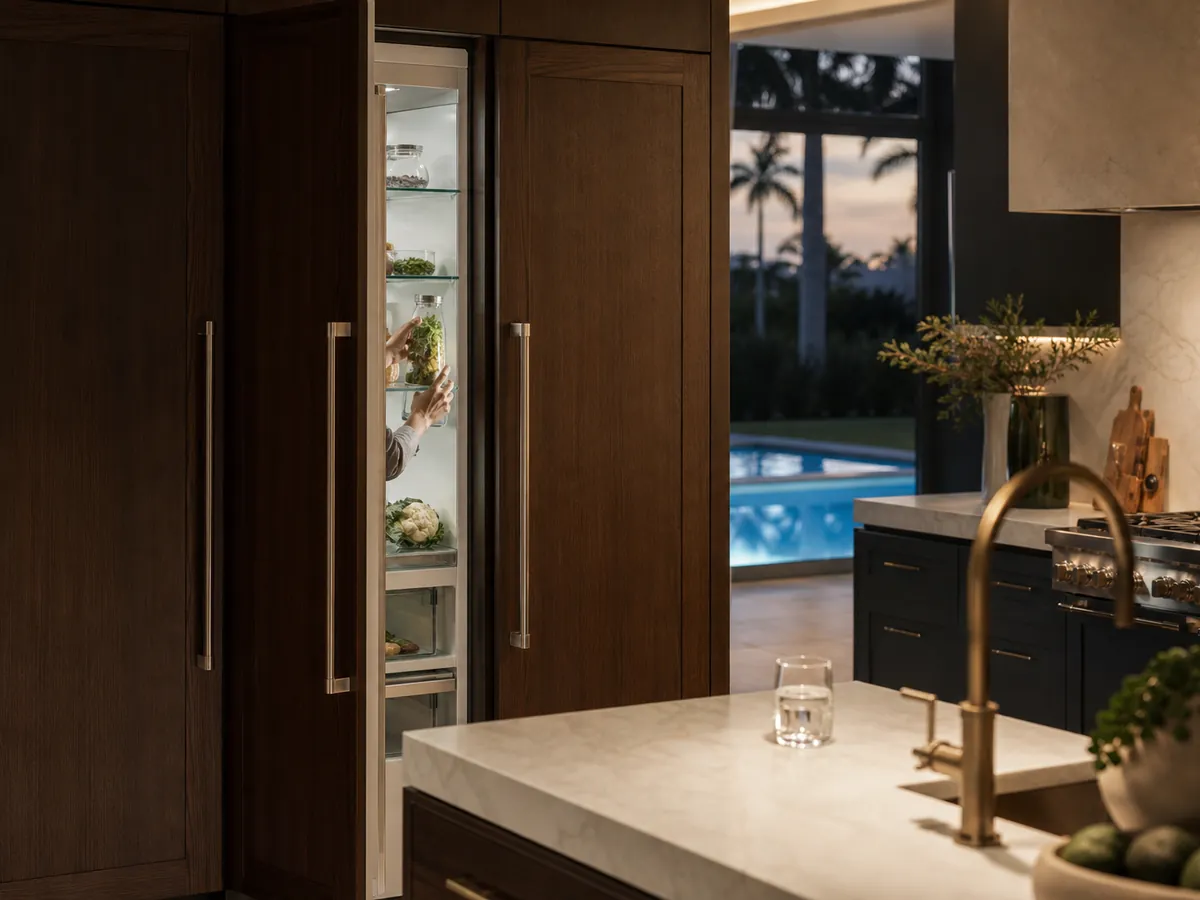
Before a storm reaches Tampa Bay, put a thermometer in your Monogram refrigerator and freezer, make extra ice, turn off the gas and water supply to what you will not use, and unplug sensitive appliances if it is safe to do so. After the power returns, judge food by measured temperature and time, not by how it looks or smells.
What should you do with refrigeration before a storm?
Hurricane season runs from June 1 to November 30, so the best time to prepare is early, not when a watch is posted. Place a refrigerator thermometer in both the refrigerator and the freezer sections, and note the readings while the power is on. Without a baseline, you cannot judge afterward.
Freeze water in containers and keep ice packs on hand. A full freezer stays cold longer than a half-empty one, so fill spaces with containers of water. Group food together so it holds the cold. Use the temperature controls only as your use-and-care guide describes, and avoid constantly opening the doors during an outage.
If a storm is close, move what you can to a cooler with ice. Keep medicines that need refrigeration together and easy to grab.
How do you protect the ice maker and water supply?
An ice maker connected to a water line can leak or run strangely if the home loses power or water pressure. Before leaving for an evacuation or a long outage, turn the ice maker off at its control and close its water supply valve. Empty the bin so melted ice does not pool.
The refrigerator’s filtered water dispenser also depends on the home supply. If officials advise boiling or avoiding tap water after a storm, do not rely on the dispenser or the ice, and discard ice made during the period. Replace the filter and flush the line once the water is cleared for use, as your guide explains. Keep drinking water on hand in sealed containers rather than counting on the dispenser.
What about the range, oven and gas supply?
Make sure every burner and oven control is off. If you evacuate, close the gas shutoff valve to the range, if you know where it is and it is safe to reach. Do not try to dismantle gas lines. If you ever smell gas, leave the home, do not touch switches or phones inside, and call the gas utility or 911 from outside.
For a Monogram range or rangetop, do not use it as a heater and do not cook with a gas appliance in a closed house during an outage without ventilation. Never bring a charcoal or gas grill indoors. After a storm, if gas service was interrupted, wait for the utility to restore it before relighting anything, and watch for smells.
| Appliance | Before the storm | After the storm | Do not |
|---|---|---|---|
| Refrigerator and freezer | Thermometers in, extra ice, doors closed | Check temperature and outage time | Judge food by look or smell |
| Ice maker | Switch off, close the valve, empty the bin | Flush, discard first ice | Use ice made during a water advisory |
| Range and rangetop | Burners off, gas shutoff closed if you leave | Wait for gas service, check for smells | Relight with a gas smell present |
| Dishwasher and wall oven | Breaker off if flooding is likely | Have it inspected after any water exposure | Power up a wet appliance |
| Water supply lines | Close valves if you leave | Check connections for leaks | Ignore damp cabinet floors |
How do you judge food after an outage?
The USDA guidance on power outages is built on temperature and time. In general terms, a closed refrigerator keeps food cold for only a short period, and a full freezer holds longer than a half-full one. Perishable food that has been above the safe refrigerator temperature for too long should be thrown away. Use the thermometer, not your senses, to decide.
When in doubt, throw it out is the rule that protects you, and the USDA page linked below explains how to treat refrigerated food, frozen food and the thawed items in between. If you did not have a thermometer in the freezer, look for ice crystals or a still-frozen core only as part of the guidance, and remember that refreezing rules depend on the temperature that food reached.
What if the kitchen floods or power surges?
Storm surge near the coast can put water around appliances, and floodwater can contain contaminants. Do not plug in a refrigerator, oven, dishwasher or any appliance that was in water. Turn off the breaker for the area, and have the appliance inspected before use.
Power surges often come when power is restored. If you can, leave a few appliances unplugged until the service is steady, then restore them one at a time. A surge protector helps, though it cannot make an appliance safe against a lightning strike.
When should you call a technician?
Call after a storm if a refrigerator or freezer will not cool, an ice maker or dispenser leaks, a range or oven does not respond, a dishwasher drains poorly, or any appliance got wet. Check your warranty terms, since independent service does not by itself void a warranty, and ask about what the repair would involve before anything starts.
Frequently asked questions
Should I turn the refrigerator to its coldest setting before a storm?
A slightly colder setting can give a little extra margin, but do not freeze produce or overload the unit. Check your guide for adjustments and note the original setting so you can return to it afterward.
Can I use a generator for my refrigerator?
Many people do, but connect it as the generator instructions and a licensed electrician advise, and keep it outdoors, away from windows and doors. Never run a generator inside the house or garage.
Is the ice in the bin safe after an outage?
Ice that melted and refroze, or that sat in warm conditions, should be discarded. When in doubt, empty the bin and let the machine make new ice after the power and water are stable.
What if my appliance clicks or will not start after power returns?
Give a refrigerator a few minutes to restart, since the cooling system can pause before running. If it does not start, check that the outlet works and that the breaker has not tripped.