Using and Cleaning a Monogram Warming Drawer Safely
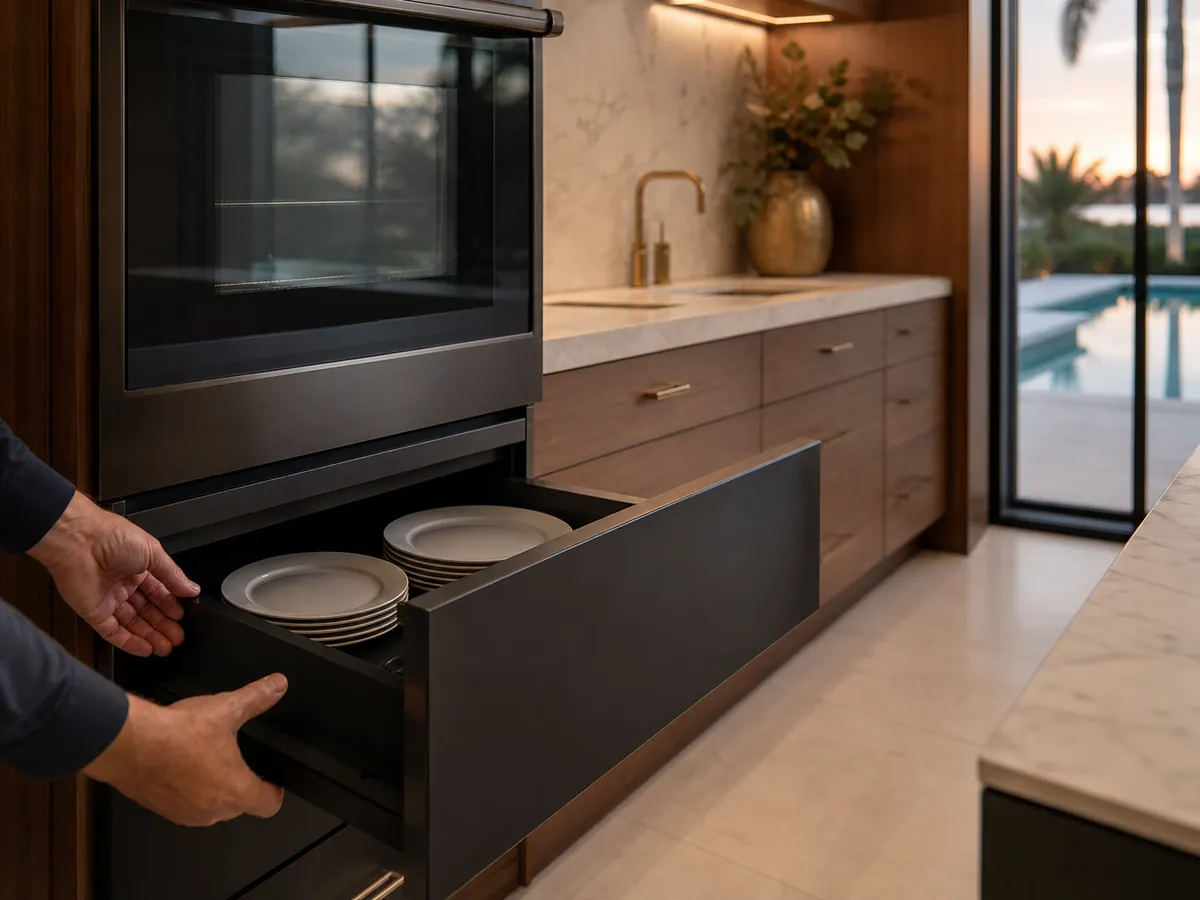
A Monogram warming drawer keeps cooked food at serving temperature, not cooking it, so use it for hot food that is already fully cooked, choose the setting from your guide, adjust moisture for crisp or soft dishes, and wipe it clean after it cools. Never store anything flammable, plastic that is not heat-safe, or raw food inside it.
What is a warming drawer meant to do?
A warming drawer holds food that is already cooked until you are ready to serve. It is not a cooking appliance and it does not reheat cold leftovers to a safe temperature. Think of it as a place to hold a roast, rolls or sides while the rest of dinner comes together, and to warm plates before serving.
Food safety still applies. Hot food must be kept hot, and the USDA guidance is to keep cooked food above the safe holding temperature, not to let it sit in the warm range for long. Use a food thermometer to check a dish before serving. If you will hold a dish for long, measure it and do not rely on how warm the drawer feels.
How do you pick the right setting?
Your use-and-care guide describes the settings on your model, such as low, medium and high levels, and sometimes a moisture control. Lower settings suit delicate food and plates. Higher settings help crisp items or keep heartier dishes hot. Start with the setting the guide recommends for the food type, and adjust after you check the food.
Preheat if the guide says so. Place dishes in the drawer in a single layer or loosely stacked so heat can move. Cover moist dishes if you want to keep them from drying out, and leave crisp foods uncovered. Do not force the drawer closed on a heavy load that rubs the track.
How do you manage moisture in a humid climate?
Moisture is a common reason a warming drawer smells or sweats, and Florida air adds more. Condensation forms when steam from covered dishes meets cooler surfaces. If your model has a moisture or vent control, use it as the guide describes: more venting for crisp food, less for soft dishes.
After use, leave the drawer open a little until it cools and dries, if the guide permits. Moisture left inside a closed drawer can cause odors and can harm the finish. Wipe any condensation with a dry cloth. In a closed, shut-up house during summer, make the drying step a habit.
| Item | Store in the drawer? | Why | Better choice |
|---|---|---|---|
| Fully cooked hot food in oven-safe dishes | Yes | This is its purpose | Check with a thermometer |
| Plates and serving dishes | Yes, if oven-safe | Warm plates stay warmer | Handle with mitts |
| Raw meat or uncooked dough | No | Not hot enough to cook safely | Use the oven |
| Plastic, paper, towels or cardboard | No | Can melt or ignite | Store elsewhere |
| Flammable liquids, aerosol cans | Never | Fire and explosion risk | Cool, ventilated storage |
How do you clean it safely?
Turn the drawer off and wait until it is completely cool, then switch off the breaker if you will reach into the cavity. Take out any removable rack or pan as your guide describes. Wipe the interior with a soft cloth and warm water with a little mild soap, rinse the cloth and wipe again, and dry.
For stuck-on spills, use a damp cloth and give the soil time to soften. Avoid abrasive pads, oven cleaner and harsh chemicals. Do not spray liquid into the cavity, and do not pour water into the drawer. Wipe the front panel and handle with a mild cleaner suited to the finish, drying with the grain.
Check the track and rollers for crumbs or grease. Gently clear debris you can see, but do not take the drawer off its track unless the guide shows how. A sticking drawer is better handled by a technician than forced.
When should you call a technician?
Call if the drawer does not warm, overheats, smells like burning with nothing inside, shows an error, will not open or close smoothly, or if the control does not respond. Do not use it until it has been checked if you notice scorching or melted marks.
Check your warranty terms. Independent service does not by itself void a warranty, and we can discuss what we find before any work begins.
Frequently asked questions
Can I use a warming drawer to proof dough?
Some models have a proofing setting, and your guide says so if yours does. If not, do not assume a warming setting is suitable for dough, since temperatures may be too high or uneven.
How long can food stay in the drawer?
Quality drops with time even when the food stays hot, so serve it as soon as you can. For safety, check the temperature with a thermometer and follow USDA guidance on holding hot food.
Why is there a burning smell the first time I use it?
New appliances can give off a light odor from manufacturing residues the first time they heat. Run it empty as your guide recommends, with the kitchen ventilated. If a smell persists later, stop and call.
Can I put the drawer on all night to keep food warm?
That is not a good idea. Food quality and safety both suffer, and long unattended heating is not what it is designed for. Refrigerate leftovers promptly instead.