Monogram Wine Reserve Temperature Drifting Between Zones
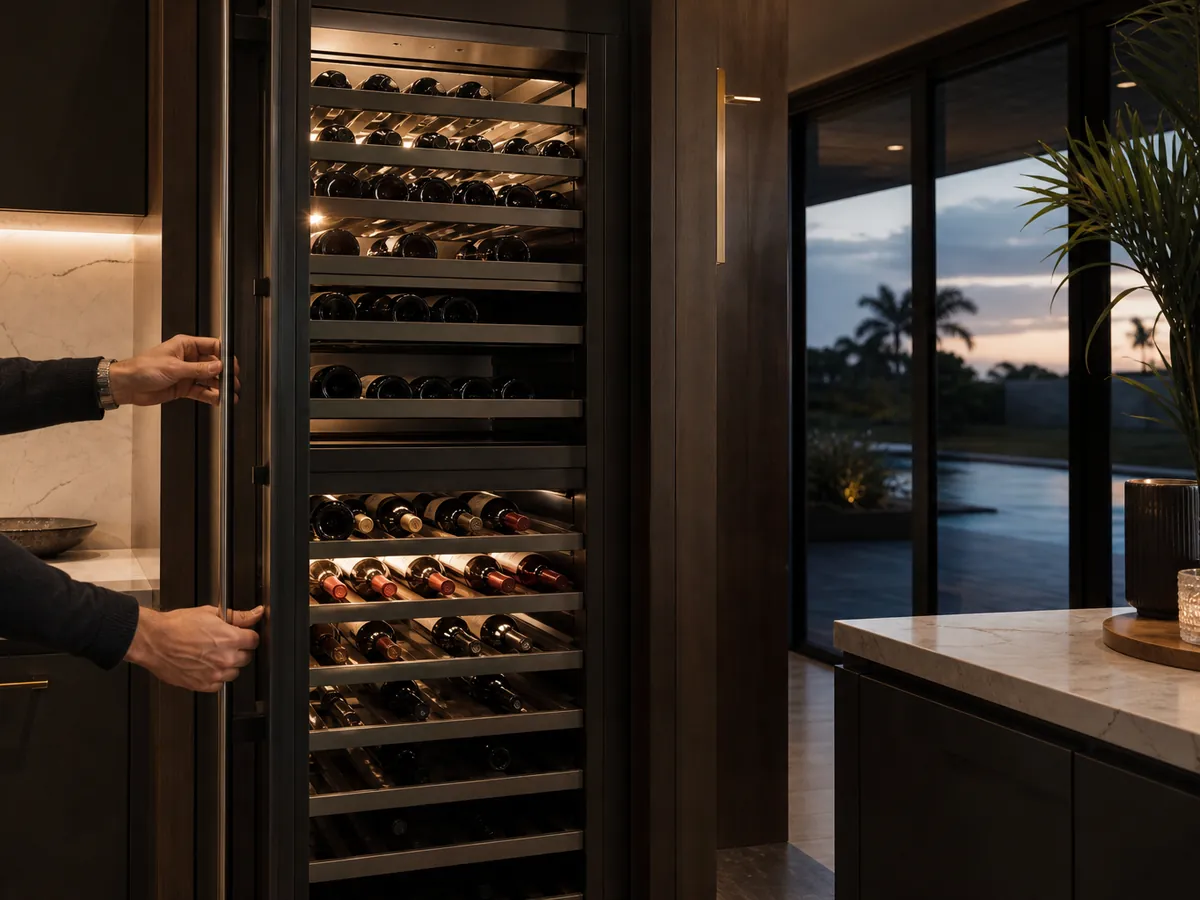
If one zone of your Monogram wine reserve is warmer than the other, or the temperature wanders through the day, the most common explanations are a door that is not sealing, vents blocked by bottles, a crowded load or settings that were changed. Check those four before you worry about the cooling system.
Why does one zone run warmer than the other?
A dual-zone wine reserve cools two compartments to two different set points, usually a cooler zone for whites and sparkling wine and a warmer one for reds. The two zones share cold air, so a change in one can affect the other. If the upper zone is set close to the lower one, or if airflow is blocked in one area, the difference between them can look wrong even when the unit is working as designed.
Cold air is heavier than warm air, which means the bottom of a cabinet is often cooler than the top. A small difference between shelves is normal in a wine unit. What you want to find is a drift that keeps growing, or a zone that cannot reach its set point at all.
What should you check first?
Use a thermometer, because the display shows the control’s target and not always the temperature among the bottles. Put a wine thermometer or a small thermometer in a glass of water in the zone for several hours before you read it.
- Look at the set points for each zone and confirm that they are not too close together.
- Check whether anyone just loaded a large number of warm bottles. A big load pulls the temperature up for many hours.
- Make sure the door is closed all the way and the glass is not held open by a bottle neck or a label.
- See if the unit is in direct sun or beside a heat source such as a dishwasher vent or an oven.
Change only one thing at a time and wait before you judge. Wine units react slowly on purpose, and a few hours of patience prevent chasing the control up and down.
Are the door seal and the vents to blame?
They often are. A door seal that is dirty, stiff or torn lets in warm, humid air, which is a particular problem in a Florida kitchen. Wipe the seal with warm water and mild soap, dry it and look for gaps. Condensation on the glass or a damp smell near the door is a sign that outside air is getting in.
Vents are the other half. Cold air is moved by a fan and the vent openings, and bottles pushed against them can stop the air in that zone. Pull a few bottles back and look for a clear space around each opening. Leave the fan housing and any panel alone. If you hear a fan that is silent or rattling, switch the unit off at the breaker and have it checked, since opening a built-in unit is not an owner task.
| Sign | Likely cause | What you can check | Next step |
|---|---|---|---|
| Upper zone warmer than set | Blocked vent or full load | Clear bottles away from the vents | Call if it stays warm for a full day |
| Both zones warm | Door not sealing or room too hot | Test the door seal, check nearby heat | Call if the door closes correctly |
| Temperature swings during the day | Frequent door opening or heat from sun | Note times, move the unit away from direct light | Call if it swings with the door shut |
| Fog or drops of water on the glass | Humid air entering at the seal | Clean and inspect the gasket | Call if the seal is torn or flat |
| Zone set points keep changing | Control not holding after an outage | Set both zones again and watch | Call if the settings will not hold |
Does Florida weather affect wine storage?
It does. A hot, humid kitchen or lanai makes a wine reserve work harder, and an outage in a storm can leave bottles warm while the unit is dark. If your home is closed for months, leave the reserve on with the door shut, set to its normal temperatures, rather than turning it off. If you decide to turn it off, empty it and leave the door ajar so the cabinet can dry out.
After a power outage, give the unit time to bring both zones back down and recheck with a thermometer. A short outage is usually not a problem for wine in a closed cabinet, but warm bottles are harder to cool evenly. Do not move them in and out of the unit repeatedly while it is recovering.
When is it time to call a technician?
Call when a zone will not reach its set point after you have cleared vents, cleaned the seal and let the unit settle for a full day. Call as well if you hear a fan that is silent, a compressor that runs without a break, or see ice or water inside. Those signs may involve a sensor, a fan, an airflow damper or the sealed system.
We check both zone sensors, the fans, the airflow path between the zones, the seal and the control. Because a dual-zone unit relies on the airflow between zones, a part that fails in one place can show up as a temperature problem in the other. We will tell you what we find and give you the price in writing before any repair starts. If the unit is under warranty, check your warranty terms; independent service does not by itself void a warranty.
Frequently asked questions
What temperatures should the two zones be set to?
Follow the ranges in your use-and-care guide. In general a cooler zone suits whites and sparkling wine and a warmer zone suits reds, but the exact numbers depend on the wine. Keep the zones from sitting too close together so that each one has room to hold its own temperature.
Is a small difference between shelves normal?
Yes. Cold air settles low, so lower shelves are often a little cooler than upper ones. What matters is whether the whole zone holds steady and stays near its set point. A large gap or a steady drift is worth a check.
Can I overload the reserve after a party?
You can, and it pulls the temperature up for hours. Add warm bottles a few at a time when you can, leave space around vents, and give the unit time before you judge its performance. A thermometer tells you more than the display.
Should I turn the unit off during hurricane season?
Not unless you will be away and have emptied it. For a storm, keep the door closed and avoid opening it. If the power goes out, wine in a closed cabinet holds its temperature better than in an open one.