Caring for a Monogram Wine Reserve in a Florida Home
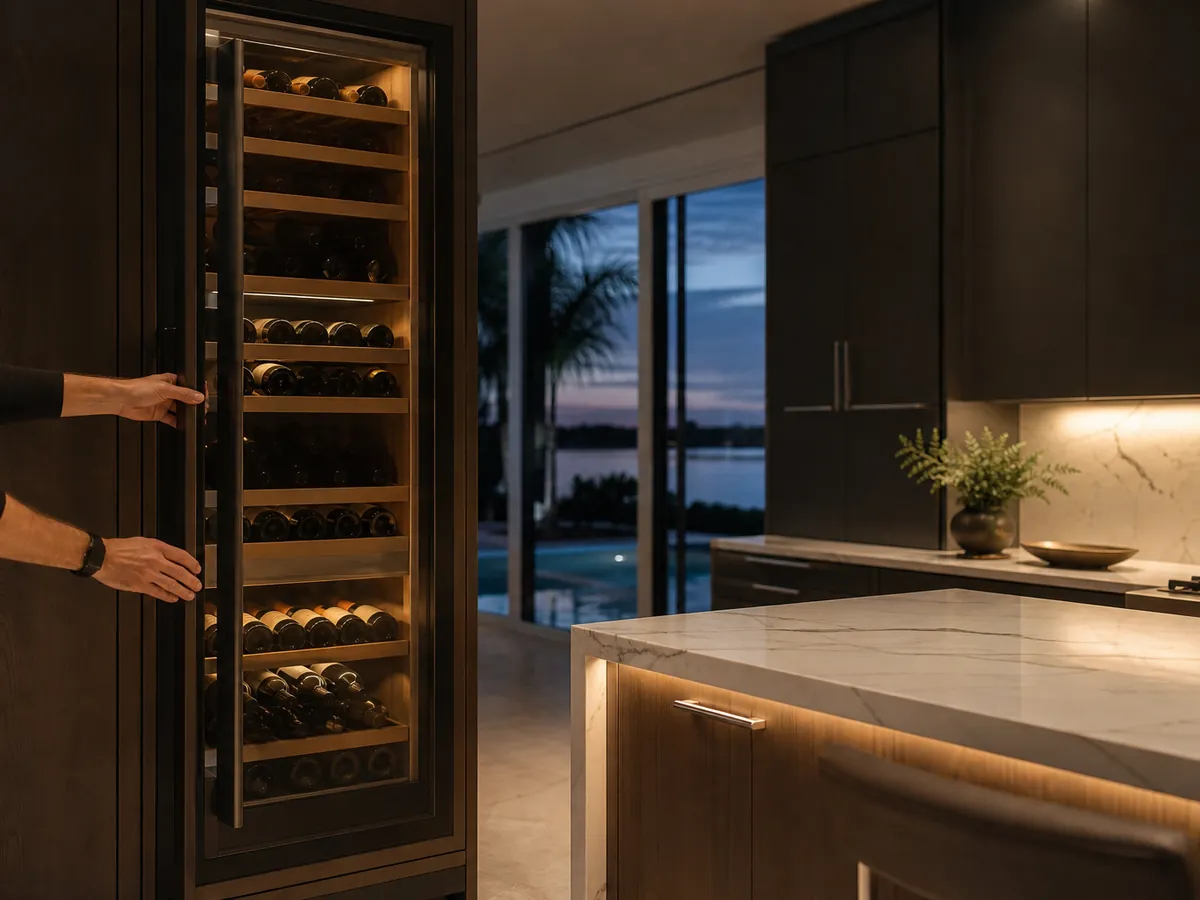
A Monogram wine reserve does best in a Florida home when it has room to breathe, sits out of direct sun and away from the range, has a clean and snug door seal, and gets a gentle wipe-down a few times a year. Humid air and heat are the main stresses, so most care comes down to airflow, the seal and keeping the cabinet from collecting moisture and dust.
Where should a wine reserve go in a Tampa Bay house?
Placement decides more than any setting does. A reserve next to a dishwasher, an oven or a sunny lanai door has to fight that heat all day, and its cooling system runs harder as a result. A cooler wall, away from windows and appliances that give off warmth, is a better home for it.
Follow the installation guide for clearances and ventilation. Built-in and undercounter models are designed to sit within cabinetry, but they still need the air path the guide describes. Never cover the grille or stack storage in front of it.
If the reserve will live in a garage, an enclosed lanai or any space without air conditioning, check your guide first. Summer heat and winter swings outside the conditioned part of the house are outside what most indoor appliances are built for.
How does humidity affect the cabinet and the door seal?
Wet air does two things around a wine cabinet. It condenses on cold surfaces, which can show up as beads on the glass or damp spots inside, and it encourages mildew where moisture lingers. Corks are generally happier in a moist environment than a bone-dry one, so a little humidity inside the cabinet is not automatically bad, but standing water and musty smells are.
The door gasket is the barrier between the cooled cabinet and warm kitchen air. If it is dirty, dented or not closing evenly, humid air gets in, and the cabinet works harder and collects more condensation. A door that does not swing fully shut because of a bottle or shelf pressing on it creates the same problem, so check that nothing is blocking it.
How do you clean it without harming it?
Switch off the reserve at the control or unplug it, and remove the bottles you can safely take out. If you will leave it off for more than a short time, move the wine somewhere cool. Wipe the interior with a soft cloth and a solution of baking soda and warm water, or the cleaner your use-and-care guide names. Avoid strong perfumed products, since a cabinet holding wine can absorb odors and pass them to the bottles.
Clean the glass with a soft cloth and a non-abrasive cleaner. Wipe the gasket with warm water and mild soap, dry it, and look at it for cracks or flattening. Dust the grille and the area around it with a brush or vacuum. Let the interior dry fully before you restart it and put the bottles back in.
| Task | How often | Who | Notes |
|---|---|---|---|
| Wipe the door gasket | Every month or two | You | Mild soap, dry afterward |
| Dust the grille and vents | Every few months | You | Power off first |
| Clean the interior and glass | Twice a year | You | Remove bottles, avoid scented cleaners |
| Check temperature with a separate thermometer | Seasonally | You | Compare with the display |
| Coil and fan inspection | When performance changes | Technician | Do not open sealed cooling parts |
| Gasket replacement | When damaged | Technician or you | Order the part for your exact model |
What should you do during storms and outages?
Summer thunderstorms and hurricane-season outages are a real part of life here, so protect the reserve. A surge protector rated for appliances is a sensible precaution, though it will not help in a direct lightning strike. During a storm you can unplug the unit if it is safe to reach it.
When power comes back, the cooling system sometimes needs a few minutes before it restarts. Do not repeatedly switch it on and off. Keep the door closed, since a closed cabinet holds its temperature for some time, then check the display and compare it with a thermometer once it has settled.
If a coastal home floods, do not plug the reserve back in. Water in the base or the electrical parts is a job for a technician, and the unit should be inspected before anyone uses it again.
When should you call a technician?
Call when the cabinet will not reach the temperature you set, runs constantly, makes new grinding or rattling sounds, leaks water, or shows ice or frost it did not before. Also call if the door will not seal after cleaning, or if the control shows an error you cannot clear after a power reset.
Check your warranty terms. Independent service does not by itself void a warranty, and we can tell you what we find and whether a repair is worth it before any work starts.
Frequently asked questions
Is it normal for a Monogram wine reserve to hum or click?
Soft humming, a click at startup and a gentle gurgle are typical sounds of a cooling system. Loud rattles, grinding or a sound that changes suddenly are worth checking. Make sure the unit is level and nothing touches it first.
Can I store wine there for years?
A reserve is designed to keep wine at serving or storage temperatures, but your guide describes what it is built for. For very valuable bottles, think about how the cabinet handles outages and summer heat, and keep a thermometer inside.
Why do I see moisture on the glass door?
Warm humid air meeting cool glass makes condensation. Check that the door seals, the room is air conditioned and the cabinet is not in direct sun. Wipe it with a soft cloth when it appears.
Should I leave it running while we are away for the summer?
If you keep wine inside, yes, and keep the home cooled enough to protect it. If you empty it, clean it and leave the door open as your guide advises so it does not smell musty.