Monogram Range or Oven Acting Up After a Storm Outage
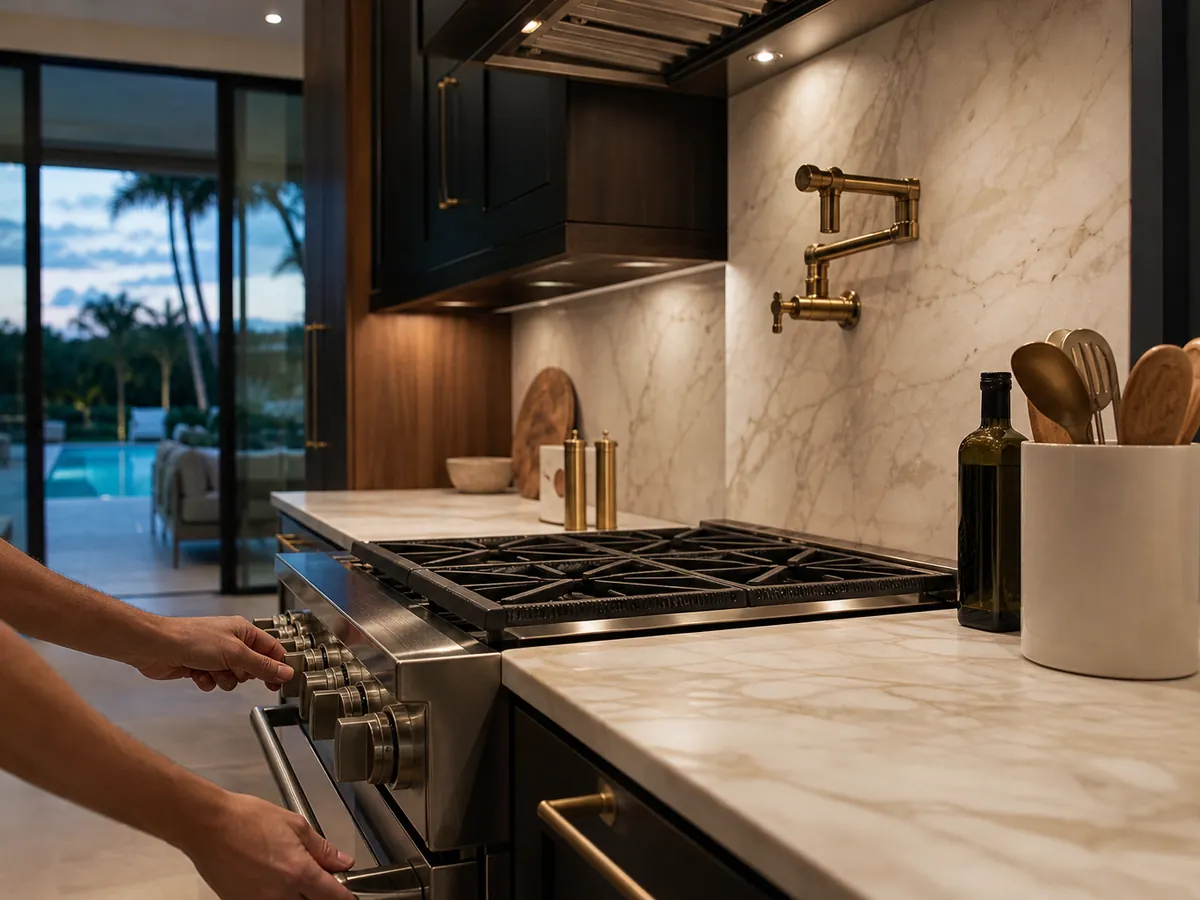
After a storm outage, a Monogram range or oven usually behaves oddly because the control lost power mid-task, not because anything broke. Turn off every burner and the oven, switch the range breaker off for a few minutes, then turn it back on and reset the clock. If the display stays dark, trips the breaker or smells scorched, stop and call.
Why does a range act strangely after the power comes back?
A Monogram range or wall oven runs on an electronic control that keeps track of the clock, the cooking mode and any timer. When power drops and returns, the control restarts. Some units come back with a blinking clock, a canceled bake, or a keypad that ignores touches for a moment.
Summer storms across Tampa Bay often bring a quick flicker followed by a return of power, and that fast on-off-on is harder on electronics than a clean outage. The control may restart in an odd state even though the hardware is fine, and a deliberate reset usually clears it.
What should you do first, step by step?
Safety comes before any reset. Work through the list in order.
- If you smell gas, leave the home now. Do not touch switches or phones inside, and call the gas utility or 911 from outside. Do not reopen the kitchen until you are told it is safe.
- Turn every burner knob to off and make sure the oven is off. Let any hot surface cool.
- Switch the range or oven breaker off at the panel and leave it off for a few minutes.
- Switch the breaker back on, then set the clock and check that the display responds.
- Try a short bake with an empty oven and watch whether it heats normally.
On a gas range, the burners ignite with electricity, so a power loss can stop the spark. After power returns, the igniters usually click again. Gas rangetops and ranges that keep clicking with no flame need a technician, and you should turn the knob off rather than keep trying.
How do you tell a simple reset from surge damage?
A surge pushes a spike of voltage through the home wiring, and sensitive boards are the first to suffer. The difference between a harmless restart and damage shows up in what happens after the reset.
| What you see | Likely meaning | What you can check | Next step |
|---|---|---|---|
| Clock blinking, otherwise normal | Control restarted after outage | Reset the clock and test a bake | None if it works |
| Keypad ignores touches | Control stuck after restart | Breaker off for a few minutes, then on | Call if it repeats |
| Display dark after breaker is on | Board or power supply failure | Confirm the breaker is not tripped | Technician visit |
| Oven will not heat, display fine | Element or relay problem | Check the mode and settings only | Technician visit |
| Burners click, no flame | Ignition or gas supply problem | Turn knobs off, no repeated attempts | Technician visit |
| Burning smell or tripping breaker | Electrical damage | Breaker off, stop using it | Call right away |
Which signs mean you should stop using the range?
Stop and switch the breaker off if you notice a burning or scorched smell, a crackling sound, scorch marks near the control panel, or a breaker that trips again as soon as you reset it. Those are signs that a part has failed electrically, and running the range can make the damage worse.
Also stop if the oven heats far beyond the temperature you set, or if burners stay lit after the knob is off. Neither is something to test twice. Turn the appliance off at the breaker and leave it until it has been checked.
Flood is a different case. If storm surge or heavy rain put water around the kitchen floor or the base of the range, do not power the range back up. Wet electrical parts are a shock risk, and the unit should be inspected before it is used again.
When should you call a technician?
Call if the display stays dark after a clean breaker reset, if the oven or burners do not work as they did before the storm, or if any of the stop signs above appeared. After a major storm, it is also worth a call if the range was without power for days and now behaves differently, since a spike on restoration can affect parts that looked fine at first.
We check the supply voltage, the control board, the relays, the ignition parts and the wiring connections, and we run the appliance through its normal modes. If you are unsure how this affects your warranty, check your warranty terms. Independent service does not by itself void a warranty.
How can you protect the range during hurricane season?
Hurricane season runs from June 1 to November 30. When a storm is approaching, turn off the range and oven and, if time allows, switch their breaker off. This keeps the controls from taking a surge when power is restored. Switch the breaker back on once the lights have been steady for a while.
A whole-home or point-of-use surge protector installed by a licensed electrician can add protection for the electronics on built-in appliances. Ask the electrician what suits your panel. Do not plug a range into a power strip.
Frequently asked questions
Is it normal for the clock to blink after an outage?
Yes. A blinking clock means the control restarted after losing power. Set the time, run a short bake in the empty oven, and if everything responds normally you can use the range as usual.
Can I keep resetting the breaker until it works?
One careful reset is fine. Repeated resets do not fix a failed board and a breaker that keeps tripping is warning you about an electrical problem. Leave it off and call.
Should I worry about food in the oven during an outage?
Food left in a warm oven that lost power can sit in the temperature range where bacteria grow. Use a food thermometer and the USDA power-outage guidance rather than judging by look or smell.
Will a surge protector stop all storm damage?
No device prevents every kind of damage, especially a direct lightning strike. A protector reduces the chance that smaller surges reach the controls, and unplugging or switching off ahead of a storm adds another layer.