Monogram Refrigerator Beeping or Flashing: What the Alarms Mean
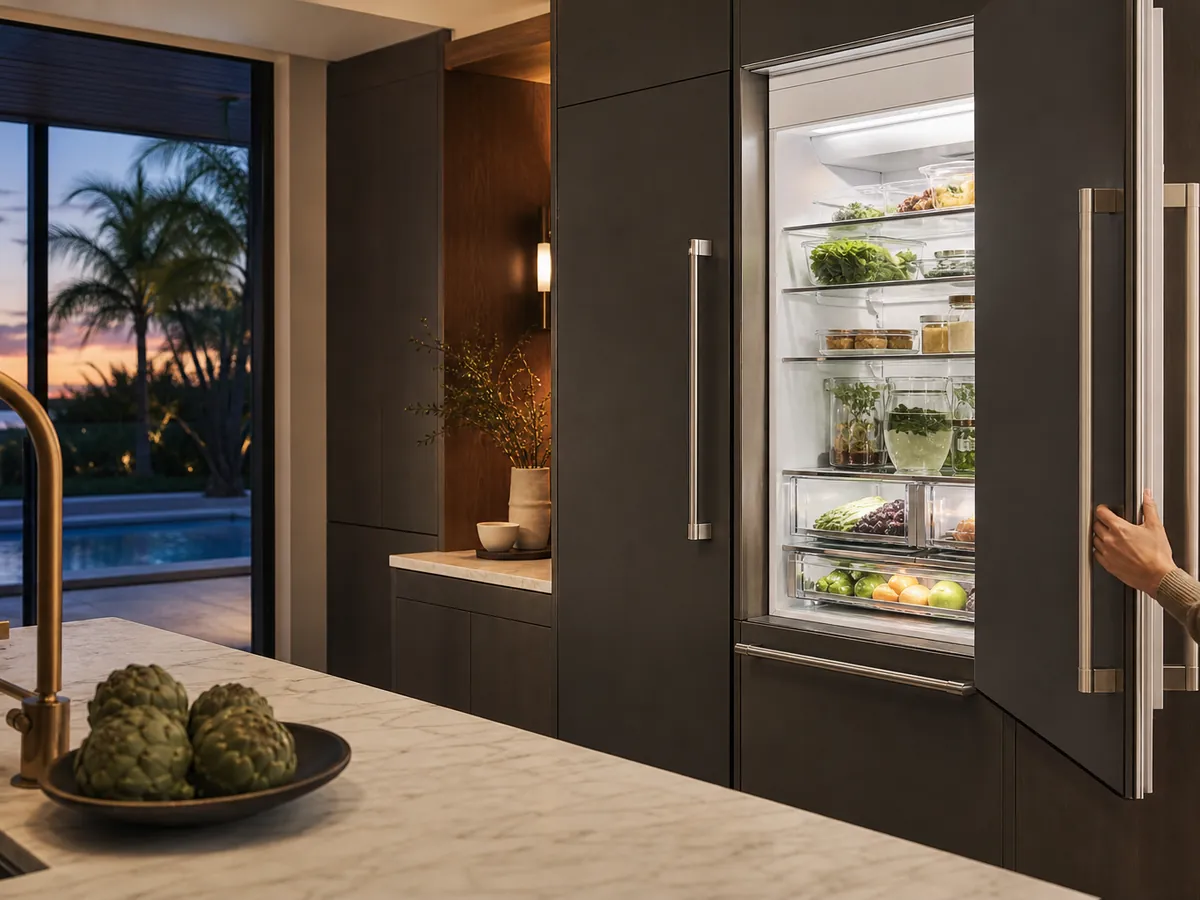
A Monogram refrigerator beeps or flashes mainly for three reasons: a door left open, a compartment that has warmed above its set temperature, or a power interruption that the display is reporting. Close the doors firmly, read the display, and check the temperature with a thermometer. If the alarm returns with closed doors, call.
Why is my refrigerator beeping with the doors closed?
A door alarm sounds when a door stays open longer than the control allows. On a built-in Monogram refrigerator with large, heavy panel doors, a door can rest slightly ajar without anyone noticing, especially when a bin, a tall bottle or a drawer sticks out and keeps it from sealing.
Walk around the unit and look for anything blocking the gasket. Push each door shut until you feel the seal engage, then watch the display. If the beeping stops, you found it. If it returns, check that the unit is level with its cabinetry, since a door that swings open slightly by itself can point to the refrigerator shifting out of position.
A dirty or folded gasket can also let a door sit open a hair. Wipe it with warm water and a soft cloth, with the refrigerator doors open and nothing hot touching the seal.
What does a temperature alarm mean?
A temperature alarm tells you a compartment has stayed warmer than its set point for a while. It does not tell you the food is spoiled, and it does not tell you why. The cause may be as simple as a door held open during a big grocery restock, or as serious as a cooling problem.
Do not guess from how the food looks or smells. Use a refrigerator thermometer. USDA guidance says refrigerated food should be kept at 40 degrees Fahrenheit or below, and that the time food spends above that matters as much as the temperature. If you cannot tell how long it was warm, ask yourself whether you can discard doubtful perishables rather than risk it.
In Tampa Bay summers, a warm kitchen and frequent door openings make the alarm more likely. Give the refrigerator a couple of hours with doors closed and see whether the temperature falls back on its own.
What does a power-outage warning mean?
After a storm outage, the display may flash or show a message to report that power was lost, and sometimes that the interior got warm. This is the refrigerator informing you, not necessarily failing. Hurricane season and summer thunderstorms mean this message is common for Florida owners.
Treat the message as a reminder to check the food. Measure the temperature in the refrigerator and freezer with a thermometer and follow the USDA power-outage guidance, which relies on measured temperature and how long power was out. A freezer that stayed full and closed holds its cold longer than a half-empty one.
If the display keeps flashing after power is stable, switch the breaker off for a few minutes and back on to restart the control. Note any message that remains.
How can you sort out the alarm type quickly?
| What you notice | Likely meaning | What you can do | Call? |
|---|---|---|---|
| Beeping that stops when you close the door | Door alarm | Clear the gasket and shut firmly | No |
| Beeping returns, doors look closed | Door not sealing or switch problem | Check bins, level and gasket | If it keeps returning |
| Warm-temperature message | Temperature alarm | Measure with a thermometer | If it stays warm |
| Flashing after a storm | Power-outage warning | Check food temperatures, reset breaker | If it persists |
| Display dark or frozen | Control or surge problem | Confirm the breaker is on | Yes |
| Beeping with warm interior and running noise | Cooling problem | Check the vents are clear | Yes |
When should you call a technician?
Call if the temperature alarm keeps returning with doors closed and vents clear, if the interior stays warm for hours, or if the control stays dark or flashes after a breaker reset. Those point to a cooling problem or a control problem, and sealed refrigerant parts are never an owner repair.
Keep the refrigerator closed while you wait, move perishables to a cooler with ice if the warm period is long, and check them with a thermometer. We look at the door switches, the temperature sensors, the fans, the control board and the cooling system, and we confirm the refrigerator holds temperature before we leave.
If you are unsure how service affects your warranty, check your warranty terms. Independent service does not by itself void a warranty.
Frequently asked questions
Can I silence the alarm?
Many controls let you silence an alarm by pressing a key, but the alarm often returns if the cause remains. Use your use and care guide for the correct key and fix the cause rather than only muting it.
How long can food stay in a refrigerator without power?
USDA guidance says a closed refrigerator keeps food cold for about four hours. After that, check temperatures and discard perishables that were above 40 degrees Fahrenheit for too long.
Is flashing always a problem?
No. A flashing display after an outage is often a report that power was lost. It becomes a service issue only if it stays on after the breaker reset or comes with warm temperatures.
Should I unplug the refrigerator during a storm?
A built-in unit is often hard to reach, so a surge protector installed by an electrician is a better choice. Avoid opening the doors during an outage, since each opening lets cold air out.