Monogram appliances after storm surge flooding: do not power on
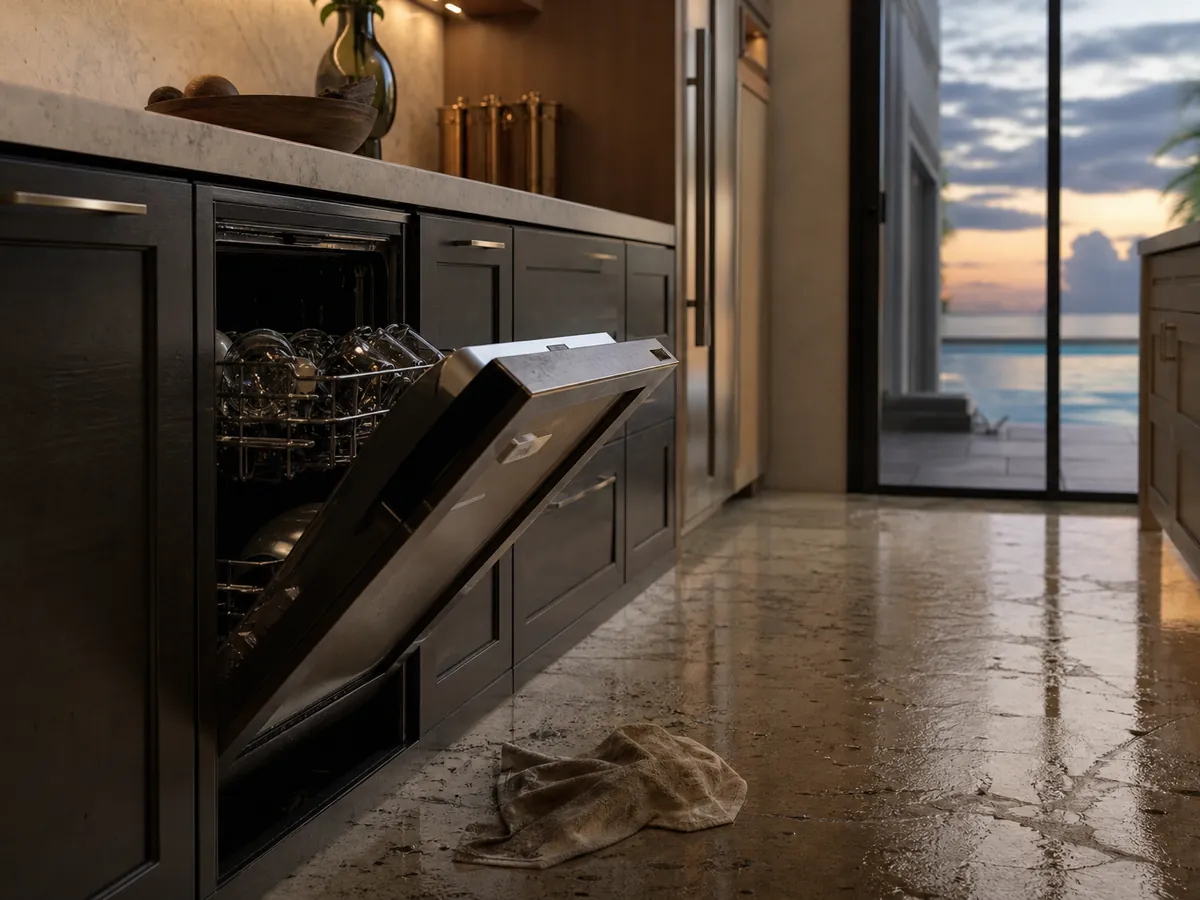
If storm surge or floodwater reached your Monogram dishwasher, oven, refrigerator, or any other appliance, do not power it on. Floodwater carries silt, salt, and contamination, and it can leave live parts unsafe even after everything looks dry. Keep the breaker off, stay out of standing water, and have the electrical supply checked before anyone tests an appliance.
Why should you not power on a flooded appliance?
Water and electricity are the first problem. Wet wiring, boards, motors, and heating parts can short out, trip breakers, start a fire, or leave a metal case energized. The second problem is what the water carried. Surge water is not clean. It brings sewage, chemicals, silt, and, along the coast, salt, which corrodes copper and steel and keeps working long after the water is gone.
The third problem is that damage is not always visible. An appliance can look fine and dry out on the surface while moisture sits in a control board, in insulation, or inside a motor. Switching it on to see whether it works can turn a repairable situation into a hazard.
What should you do first?
Safety comes before the appliances. Follow the order below.
- Do not enter standing water to reach a panel or an appliance. If water touched outlets, a breaker panel, or a meter, stay out and ask the power utility or a licensed electrician to make the supply safe.
- Leave the breakers feeding the affected appliances off. Only switch a breaker if you can reach the panel while standing on dry ground.
- If you smell gas, leave the home at once, avoid switches and phones inside, and call the gas utility or 911 from outside.
- Photograph the appliances, the waterline, and any labels before anyone moves them. Keep the photos for your records and for any claim you decide to make.
- Do not run, test, or try to dry out an appliance with a heater or fan while it is connected.
Which Monogram appliances are most exposed?
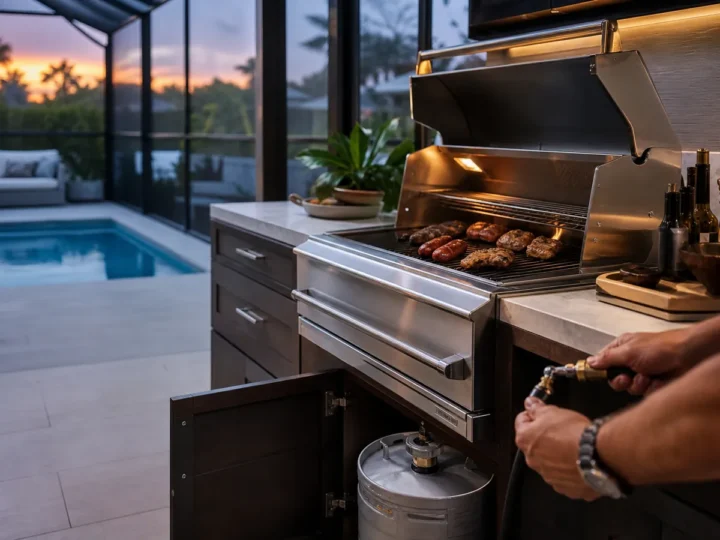
Anything low in the room sits closest to the water. A built-in dishwasher, a refrigerator column with a base grille, a warming drawer, a trash compactor, and a rangetop base cabinet are all near the floor. Wall ovens set at counter height or above may stay dry, but surge can still reach the wiring that feeds them. Appliances on a lanai or in an outdoor kitchen, including a grill, take salt and silt directly.
Wine storage and beverage centers sit low as well. Even when the door seal kept water out of the cabinet, the unit can have water in the machine area at the bottom, where the sealed refrigeration system and the electronics live.
What happens after the water is gone?
Do not start with the appliance. Start with the building. An electrician or the utility confirms that the circuits, outlets, and panel are safe. A gas professional or the gas utility checks the gas line and shutoff valves before any gas appliance is used. Only then does a technician assess the appliance.
A technician looks at how high the water rose, whether it reached the controls, motors, wiring, and insulation, and whether the water was fresh or salty. Parts that sat in contaminated water are often not worth saving, because corrosion can return after a repair. Some appliances may still be sound, particularly those that sat above the waterline. We say plainly which situation you have and give you a written price before any work starts.
What should you do with food and the refrigerator?
Food that touched floodwater should be thrown out, and so should anything stored in a cabinet that water entered, even if the packaging looks sealed. That follows general USDA and FDA guidance. Food in a refrigerator that lost power, but that the water never reached, is a temperature-and-time question, so use a thermometer and follow the USDA outage guidance rather than judging by look or smell.
Clear out the cabinet so that no spoiled food sits against the walls and seals. Leave the door open while the unit is off so that mold does not take hold in the closed cabinet.
What does each appliance need after a flood?
| Item | Why not to power it on | What you can do | What happens next |
|---|---|---|---|
| Dishwasher | Water in the pump, wiring, and board area | Keep the breaker off, photograph the waterline | Inspection after the home is safe |
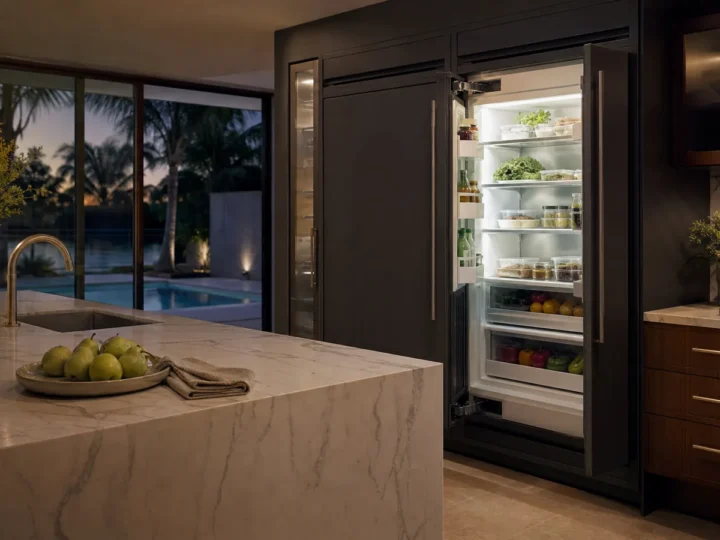
| Refrigerator or freezer column | Water in the base and machine area | Empty spoiled food, leave the door open | Assessment of the sealed system and electronics |
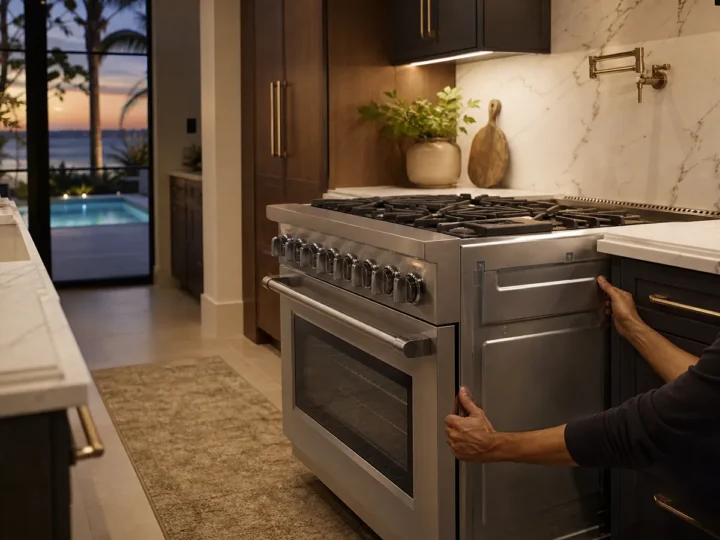
| Oven, range, or rangetop | Wet wiring, and gas appliances need the gas line checked | Leave gas off and breakers off | Utility check, then an appliance inspection |
| Wine reserve or ice maker | Moisture in the machine area | Drain nothing yourself, photograph first | Technician assesses what was submerged |
| Outdoor grill and lanai equipment | Salt, silt, and gas hose damage | Close the gas supply and keep it off | Gas line and burner inspection |
When should you call a technician?
Call after the home has been cleared by the utility or an electrician, and after you have photographed everything. If you call sooner, tell us the water stopped receding only recently, and we will advise on what to hold off on. Do not ask anyone to try powering up the appliance as a test.
Frequently asked questions
Can a flooded appliance be repaired?
Sometimes, depending on how high the water rose, how long it stayed, and what it reached. Parts above the waterline may be fine, while submerged boards, motors, and wiring often are not. We check and tell you in writing.
What if my appliance only got damp from humidity?
Ordinary Florida humidity is different from a flood. If water entered the house, treat the appliance as exposed. If it only feels damp from muggy air, a technician can check for moisture near the controls.
Should I dry the appliance with a fan?
Not while it is connected. Leave the breaker off and the door open, and let a technician decide what is safe. Drying the surface does not remove moisture inside the electronics.
Does independent service affect my warranty after a flood?
Independent service does not by itself void a warranty under FTC guidance. Flood damage is a separate matter, so check your warranty terms or ask us to look over what yours says.