Propane and natural gas safety for a Monogram outdoor grill
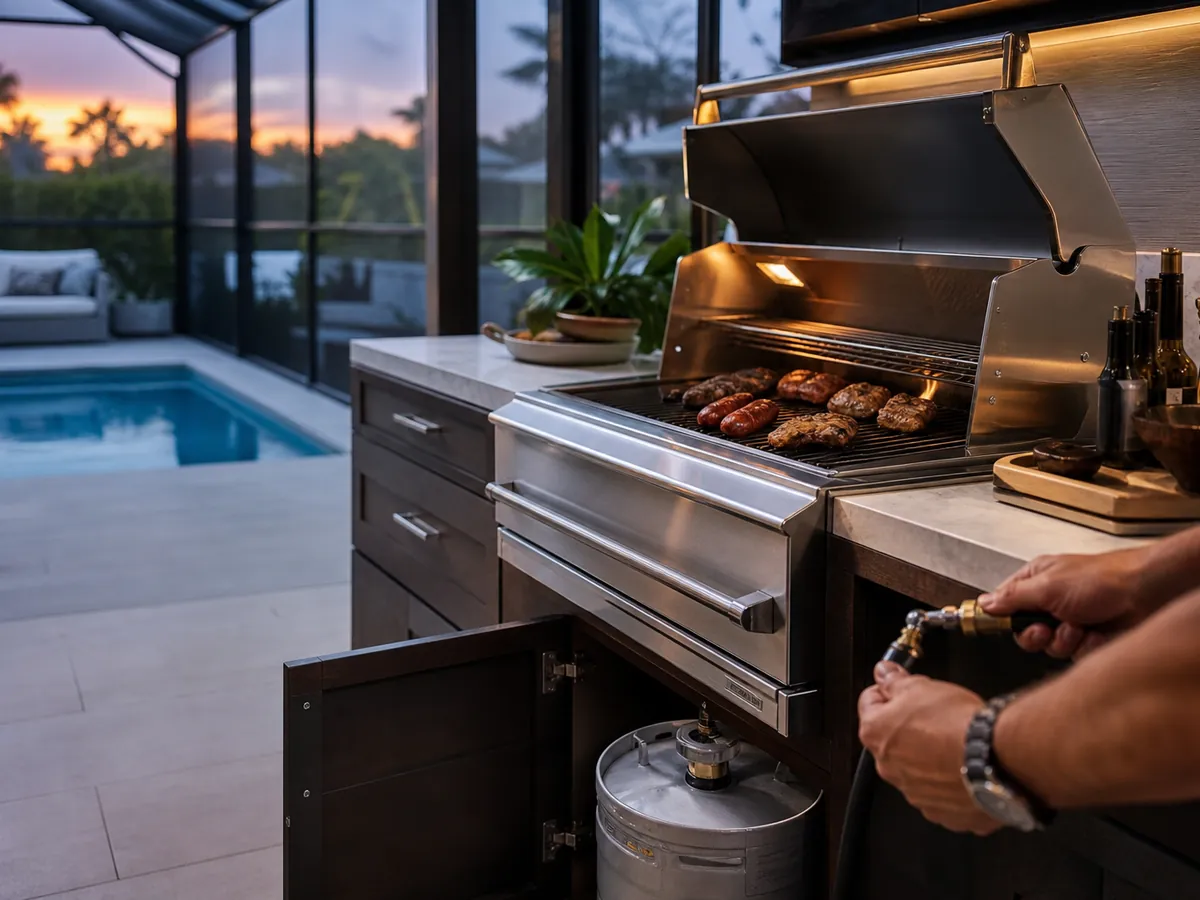
A Monogram outdoor grill runs on propane or natural gas, and both need the same habits: keep the grill outdoors, check the hose and connections by eye, and shut the gas off at the source when you finish. If you smell gas, step away from the grill, keep flames and switches away, and call the gas utility, your propane supplier, or 911.
What should you do if you smell gas at the grill?
Move away from the grill and everyone else away with you. Do not light anything, do not use a lighter or a switch, and do not try to find the leak by flame. Call the gas utility, your propane supplier, or 911 from a safe distance. If the grill sits on a lanai or near the house and the smell enters the home, leave the home too and call from outside.
Do not use the grill again until it has been inspected. A gas smell near an outdoor cooking appliance means a connection, a hose, a valve, or a burner part may be leaking. Guessing is not safe, and neither is relighting a burner that failed to ignite.
What can you check by eye on the hose, regulator, and connections?
Make every check with the burners off, the grill cool, and the gas shut at the cylinder valve or the house shutoff. Looking and feeling for damage is enough.
- Look along the whole hose for cracks, cuts, brittle spots, burns, or kinks. A hose that rubs against a hot or sharp edge is suspect.
- Check that the hose does not hang across the firebox or sit where grease can drip on it.
- Look at the regulator and the fittings for rust, dents, or white corrosion, which is common in salt air.
- On a propane model, look over the cylinder for dents, rust, and a damaged valve.
- On a natural gas model, look at the quick-connect or the line from the house for wear, and make sure the shutoff valve is easy to reach.
Replacing a hose, regulator, or any gas fitting is not an owner repair. A technician swaps the part and tests the connection with leak-detection solution. Leak checks with soapy water, where your use-and-care guide describes them, should follow that guide step by step.
How do propane and natural gas differ for a grill owner?
Propane comes in a cylinder that you move, refill, and store. Natural gas arrives through a fixed line. The risks differ. A propane cylinder must stay upright and outdoors, away from heat sources, and never in a garage, a shed attached to the house, or the trunk of a car left in the sun. A natural gas line needs a shutoff you can reach and a connection that is not bent or crushed.
Propane is heavier than air, and a leak can pool low near the ground. Do not count on that to find it. Either gas needs ventilation around the grill, which is why outdoor-rated appliances belong in open air and not under a closed or screened roof. If your outdoor kitchen is on a lanai, read your guide for clearances to the roof, walls, and screens.
How should you prepare the grill for a storm?
Florida’s hurricane season runs from June 1 to November 30, and storms bring wind, flooding, and flying debris. Before a storm, shut off the gas at the house valve or the cylinder, then close the grill’s burner controls. Disconnect a propane cylinder and store it upright outdoors in a secure, shaded place. Never bring a cylinder into the house. Secure or move the grill and any hose so that wind cannot toss them.
After a storm, look at everything again before use. If floodwater reached the grill, a cylinder, or a buried line, do not light it. A cylinder that sat in water or floated needs your propane supplier to look at it. A natural gas line that shifted needs the utility. Salt, silt, and corrosion can hide in fittings, so a technician should inspect before the grill returns to use.
What problems matter, and who handles them?
| Part | What to look at | Sign of trouble | Next step |
|---|---|---|---|
| Hose | Whole length, with the grill cool and gas off | Cracks, cuts, kinks, burns | Do not use it, call a technician |
| Regulator and fittings | Rust, dents, corrosion near the joints | White crust, loose fittings | Stop using it and have it inspected |
| Propane cylinder | Body and valve | Dents, deep rust, damaged valve | Ask the propane supplier |
| Natural gas shutoff and line | Reachable, not crushed or worn | Stuck valve, bent line | Gas utility or a licensed gas fitter |
| Burners and igniter | Burners cool and clean | Uneven flame, repeated failed lighting | Technician visit |
When should you call a technician?
Call whenever a hose is damaged, a burner will not light reliably, the flame looks wrong, or a regulator is corroded. Call after any flood or storm that touched the grill. We turn the gas off at the source, inspect the line and burners, and test the joints before the grill goes back to use. If we find something outside the grill, we say so, and your utility or propane supplier handles it.
Frequently asked questions
Can I use the grill under a screened lanai roof?
Check your use-and-care guide for clearances. Outdoor cooking appliances need open air, and a closed or screened enclosure can trap heat and gas. When the guide does not cover your setup, ask before you cook there.
Should I keep a spare propane cylinder near the grill?
No. Keep cylinders upright, outdoors, and away from heat and open flames, and do not store spares in the house or garage. Follow your supplier’s advice on storage and transport.
How often should I look at the gas hose?
Look at it each season and before the first use after a long break, such as when you return to a seasonal home. Also look after any storm. The guide for your model may suggest a schedule.
Is a recall possible on grill parts?
It is possible for any product. The CPSC recalls page lists current notices, and you can search it for your model. Check your warranty terms too, since they may affect who handles a recalled part.