New Monogram oven smell: what is normal and what is not
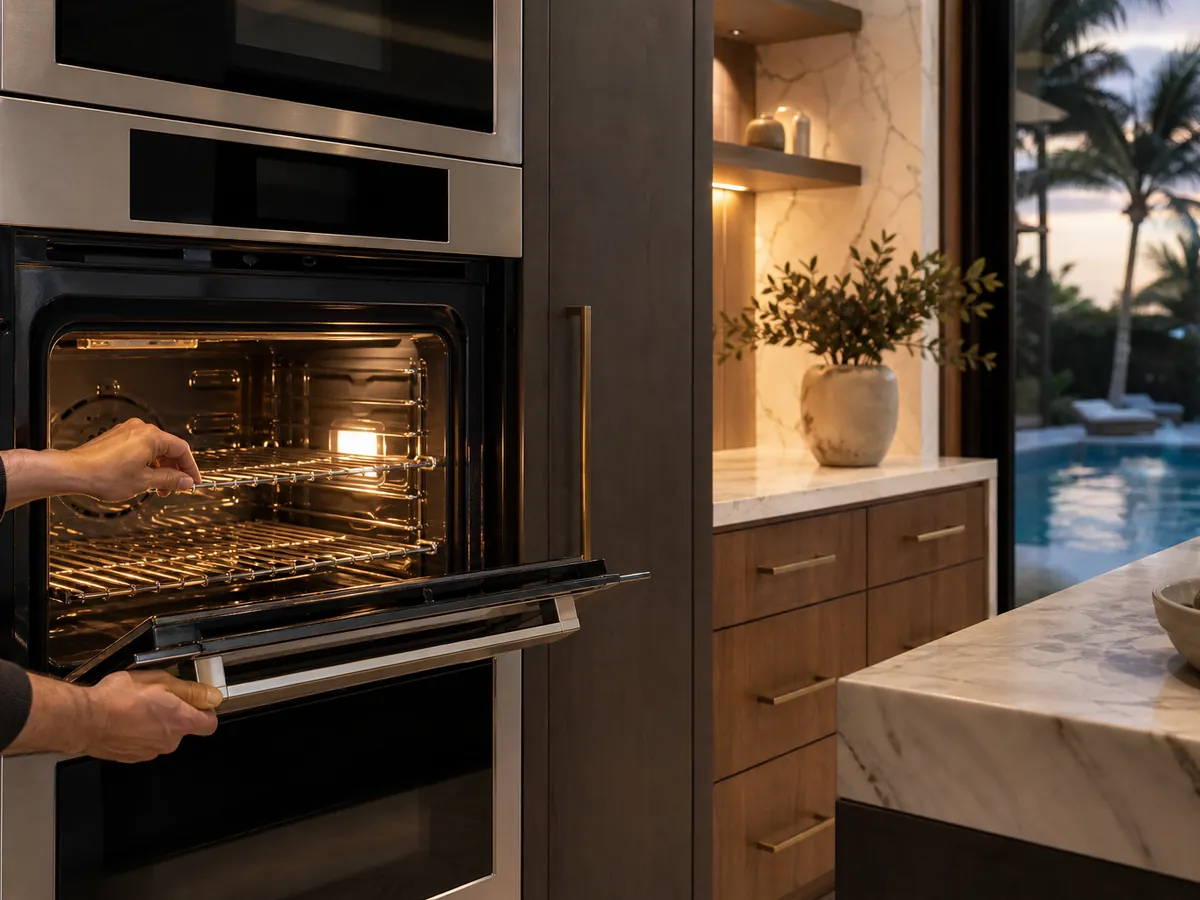
A new Monogram oven often gives off a burning or chemical smell during its first hot cycles, and a freshly cleaned oven can do the same. Protective coatings and leftover residue burn off, and the odor normally fades with use. Smoke, a smell of gas, melting plastic, or an odor that grows stronger is not normal. Turn the oven off in those cases.
Why does a new oven smell the first few times?
Manufacturing leaves traces inside any oven: oils from forming metal parts, binders in the insulation, and coatings on the cavity and the heating parts. The first time the oven gets properly hot, those traces cook off and you smell them. Most use-and-care guides for built-in ovens describe this and suggest running the oven empty before the first meal, with the kitchen well ventilated by running the hood.
The smell should get weaker each time. If the odor is the same on the fifth heating as on the first, that tells you something other than leftover manufacturing residue is going on, and it is worth a closer look.
Why does an oven smell after cleaning or a spill?
Two things produce a smell after cleaning. The first is residue from a cleaner. If any product stayed on a surface, heat bakes it into fumes. The second is food soil you missed, such as grease on the floor of the cavity or drips that ran under the lower edge of the door. Those burn off as smoke and a sharp odor when the oven next heats up.
If your Monogram oven has a self-clean cycle, soil is burned off at a very high temperature, and a strong smell during and after the cycle is expected. Pet birds are especially sensitive to fumes from hot cooking surfaces and self-clean cycles, so move them to a room well away from the kitchen. Always follow your own use-and-care guide for what to remove from the oven before cleaning.
Which smells are not normal?
Some smells are a reason to stop right away rather than wait for them to fade.
- Gas. On a gas oven or dual-fuel range, a gas smell means leave the home at once, avoid switches and phones inside, and call the gas utility or 911 from outside.
- Burning plastic or rubber. It can mean a loose item, a wrapper, or a damaged part near the heat.
- A hot electrical or fishy odor. That points to overheated wiring or a part and needs the oven switched off at the breaker.
- Heavy smoke. Light smoke from grease is common, but thick or continuing smoke is not.
Do not keep using the oven to see whether it gets better. A real heating or wiring problem can get worse with each cycle.
What can you check safely?
First turn the oven off, switch off its breaker if you are unsure, and let the cavity cool completely. Then look for the simple causes:
- Remove stray packing material, tape, or protective film from the racks, glass, and trim.
- Check the floor of the cavity and the edges of the door for spilled food or foil that caught a drip.
- Take out anything stored in the oven, such as a baking sheet with a plastic handle.
- Wipe the cooled cavity with a damp cloth. Before using any cleaner, read your use-and-care guide, since some products are not meant for every oven finish.
Do not remove back panels, touch wiring, or test elements yourself. Those belong to a technician.
What does the smell mean in each case?
| Smell | Likely cause | What you can check | When to call |
|---|---|---|---|
| Chemical or oily, first uses | Residue from manufacturing burning off | Run empty with the hood on | If it does not weaken after several uses |
| Sharp, after cleaning | Cleaner left on a surface | Wipe the cooled cavity with a damp cloth | If it returns after a second wipe-down |
| Smoky, with spilled food | Grease or drips burning | Look at the floor and door edge when cool | If smoke continues in a clean cavity |
| Gas | Possible gas leak | Nothing, leave the home | Gas utility or 911 first |
| Hot electrical or plastic | Overheated part or foreign object | Switch off at the breaker and let cool | Right away, before using it again |
When should you call a technician?
Call if the smell is not fading after several normal uses, if it comes back strongly in a clean oven, or if you saw smoke you cannot explain. Call at once for anything electrical, any burning plastic, or an oven that trips a breaker. During a visit, we look at the heating parts, the wiring we can reach, the door seal, and the cooling fan, then tell you what we found in writing before any repair.
In Florida, humidity can leave a damp, musty odor in a closed oven that has not been used for weeks, which is common in seasonal homes. A short, empty heating cycle with the hood on usually clears it. If a musty smell persists, mention it, because moisture near wiring is something we want to see.
Frequently asked questions
How long should a new oven smell last?
It should weaken with each use. Your use-and-care guide gives the maker’s break-in advice. If the odor is no better after several normal uses, or it gets worse, stop using the oven and have it checked.
Is oven smoke dangerous?
A little smoke from spilled grease is common and clears when the soil burns off. Heavy smoke, or smoke from a clean oven, is not. Turn the oven off, keep the door closed, and let it cool before you look inside.
Can I use oven cleaner in a self-cleaning Monogram oven?
Check your use-and-care guide first. Many makers advise against spray cleaners inside self-cleaning ovens, since residue can damage the finish and cause fumes when heated. When the guide is silent or unclear, ask us before using any product.
Does a smell void my warranty?
No. A smell does not affect it by itself, and independent service does not by itself void a warranty under FTC guidance. Check your warranty terms, though, so you know how to proceed.